



Stucco is one of the most architecturally distinctive exterior finishes available, a seamless, monolithic wall surface that has characterized Mediterranean, Spanish Colonial, and contemporary home styles for centuries. In Greater Seattle, stucco installation demands a level of moisture management expertise that goes beyond what’s required in drier climates. The Pacific Northwest’s sustained rainfall, moderate temperatures, and high ambient humidity make proper stucco application and detailing not just a best practice, but a requirement for a system that performs over the long term.
Integrity Roofing & Construction installs and repairs stucco siding systems throughout Greater Seattle. We understand the specific requirements of stucco in a Pacific Northwest climate, from the weather-resistive barrier and lath installation through the finish coat and all penetration details, and we bring that knowledge to every project, backed by our 20-year workmanship warranty.
Schedule your free stucco siding estimate with Integrity Roofing & Construction today.
Types of Stucco Systems We Install
Traditional Three-Coat Stucco
The traditional stucco system consists of three layers applied over metal lath: a scratch coat, a brown coat, and a finish coat. Each layer must cure before the next is applied, making three-coat stucco a multi-week process. The result is a dense, durable surface that breathes well and allows the system to manage moisture effectively. Three-coat stucco is the most robust option for Greater Seattle’s climate and is appropriate for most residential applications.
One-Coat Stucco Systems
One-coat stucco — using a thicker, fiber-reinforced single layer in place of the traditional scratch and brown coats — reduces installation time and cost. When properly applied over an appropriate WRB and lath system, one-coat stucco performs well in residential applications. It’s most appropriate for projects where the simplified installation schedule is a priority and the longer-term durability of the traditional three-coat system isn’t required.
EIFS (Exterior Insulation and Finish System)
EIFS is a synthetic stucco system that incorporates a layer of rigid foam insulation beneath the finish coat, providing improved thermal performance. EIFS has a complicated history in wet climates — early versions had significant moisture management problems — but modern systems installed with proper drainage planes and detailing perform well. We install EIFS with the drainage and moisture management details required for Greater Seattle’s climate.
Why Stucco Installation in Greater Seattle Requires Specialist Knowledge
The Weather-Resistive Barrier Is Critical
In Greater Seattle’s wet climate, the WRB behind the stucco system is the primary line of defense against bulk water intrusion. Stucco is not itself a waterproof material — it breathes and can allow water to pass through under sustained rainfall pressure. The WRB must be properly lapped, integrated with all window and door flashings, and installed without gaps or penetrations that allow water to reach the wall framing. We install WRBs at the detail level required by the climate.
Flashing at All Penetrations and Transitions
Every penetration through a stucco wall — windows, doors, utility boxes, light fixtures, hose bibs — is a potential water entry point. In Greater Seattle’s wet climate, improperly flashed penetrations are the most common source of moisture problems in stucco-clad homes. We flash every penetration with appropriate self-adhering flashing tape or metal flashing integrated with the WRB before the lath or mesh goes on.
Control Joints
Stucco is a rigid, cementitious material that cracks as it dries and as the substrate behind it moves seasonally. Control joints — intentional gaps in the stucco surface that allow controlled movement — prevent random cracking that would otherwise occur across the wall surface. Control joints must be correctly located and properly detailed to avoid becoming water entry points. We design control joint placement to minimize random cracking while maintaining a watertight finish.
Cure Time and Application Conditions
Stucco requires specific temperature and humidity conditions during application and curing. In Greater Seattle’s cool, wet climate, application must be timed to avoid freezing temperatures and must allow adequate cure time between coats. Stucco applied during inappropriate weather or cured too rapidly can develop surface defects and reduced durability. We schedule stucco work for appropriate weather windows and monitor conditions throughout the curing period.
Common Stucco Problems in Greater Seattle — and How We Address Them
Cracking
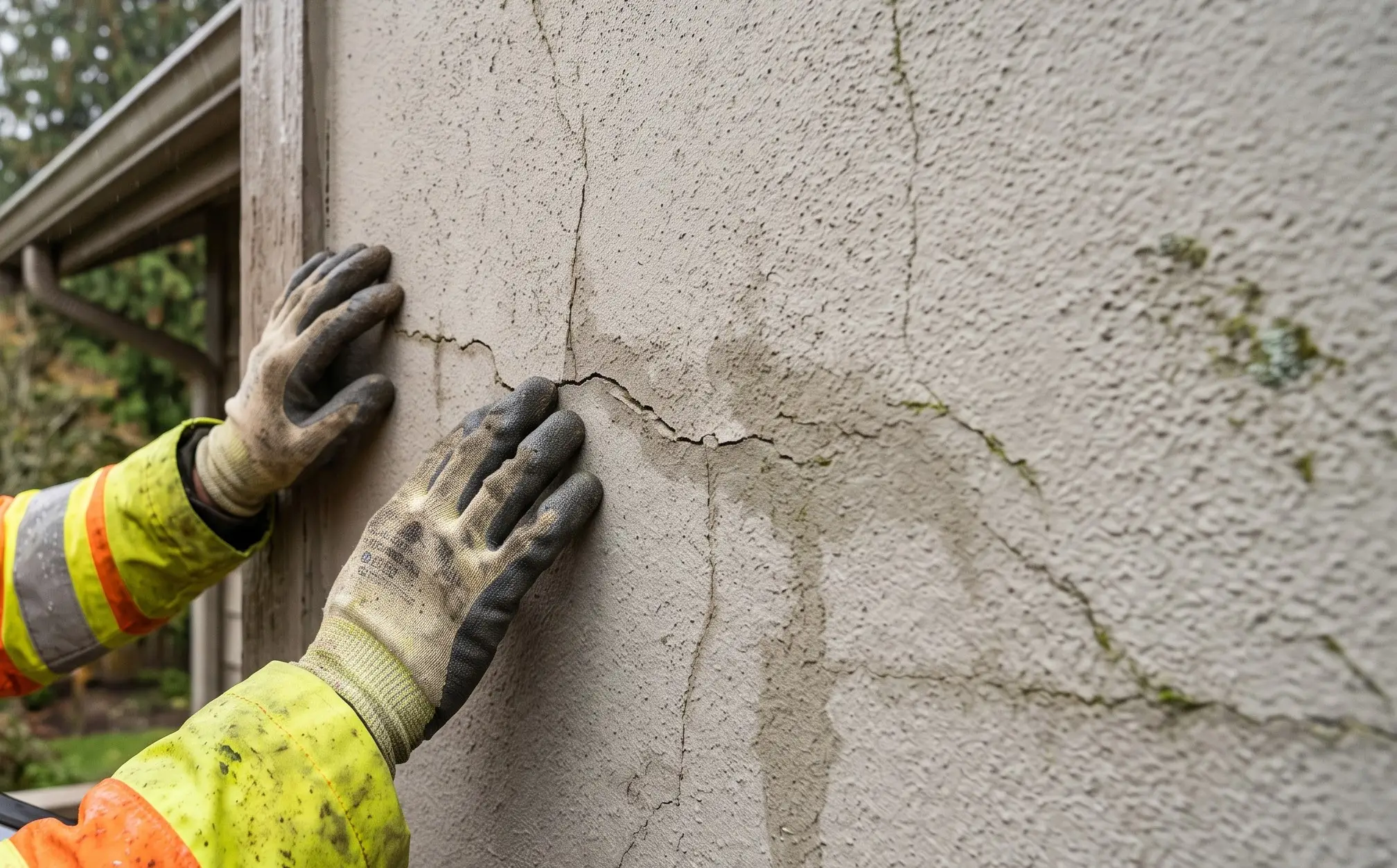
Stucco cracks for several reasons: shrinkage during curing, movement of the substrate behind it, inadequate control joints, or impact damage. Not all cracks are equal. Hairline cracks in the finish coat are cosmetic and can be sealed and painted. Cracks that penetrate to the brown coat or substrate indicate more significant movement and require investigation before repair. We assess crack patterns to determine cause before selecting the appropriate repair approach.
Water Infiltration and Wall Rot
In Greater Seattle, stucco-clad homes with failed or improperly installed WRBs can develop serious wall rot behind an exterior that still looks intact. Water that penetrates the stucco and cannot drain or dry out saturates the framing and sheathing, causing rot and mold that may not be apparent until remediation is required. We assess the full wall system — not just the stucco surface — when investigating moisture complaints on stucco-clad homes.
Delamination
Stucco that separates from the lath or from the coat beneath it produces a hollow, drum-like sound when tapped and eventually falls away from the wall. Delamination is caused by inadequate bonding between coats, contamination of the substrate, or moisture infiltration that disrupts the bond. We probe suspect areas during inspection, mark delaminated sections, and remove and replace them with properly bonded material.
Efflorescence
The white, powdery deposits that sometimes appear on stucco surfaces are efflorescence — mineral salts drawn to the surface by moisture moving through the stucco. While efflorescence itself is not damaging, it’s an indicator that water is moving through the stucco system. Persistent efflorescence in the same location suggests an ongoing moisture source that needs to be investigated and addressed.
Frequently Asked Questions About Stucco Siding in Greater Seattle
Is stucco a good choice for Greater Seattle’s wet climate?
Yes — when properly installed with correct WRB, flashing, and drainage details. Stucco’s reputation in wet climates comes primarily from early EIFS installations that lacked drainage planes and from traditional stucco installations where penetration flashing was inadequate. A properly detailed stucco system performs well in Greater Seattle’s climate and provides a durable, low-maintenance exterior when the underlying moisture management is correct.
How do I know if my stucco has moisture problems?
Signs of moisture problems behind stucco include: interior wall staining near windows or at the base of walls; soft or spongy areas in the stucco surface; paint or finish bubbling; mold or musty odors inside adjacent rooms; and cracks that appear at the same location repeatedly after repair. Any of these symptoms warrants a professional investigation of the full wall system.
Can stucco be repaired, or does it need full replacement?
Localized cracks, delamination, and surface damage can often be repaired without full removal. If moisture has compromised the wall framing or sheathing behind the stucco, the affected areas must be opened, dried, and rebuilt before the stucco is restored. We assess the full extent of damage before recommending repair versus replacement.
How long does stucco last in the Pacific Northwest?
A properly installed and detailed stucco system can last 50 years or more in Greater Seattle’s climate. The primary variables are the quality of the underlying moisture management system and how well surface cracks are maintained over time — sealed promptly before they allow water infiltration.
What warranty does Integrity Roofing provide on stucco installations?
All stucco installations are covered by our 20-year workmanship warranty. We stand behind the moisture management details and application quality of every stucco project we complete.
Ready for a stucco exterior that performs in the Pacific Northwest? Contact Integrity Roofing & Construction for a free estimate in Greater Seattle.