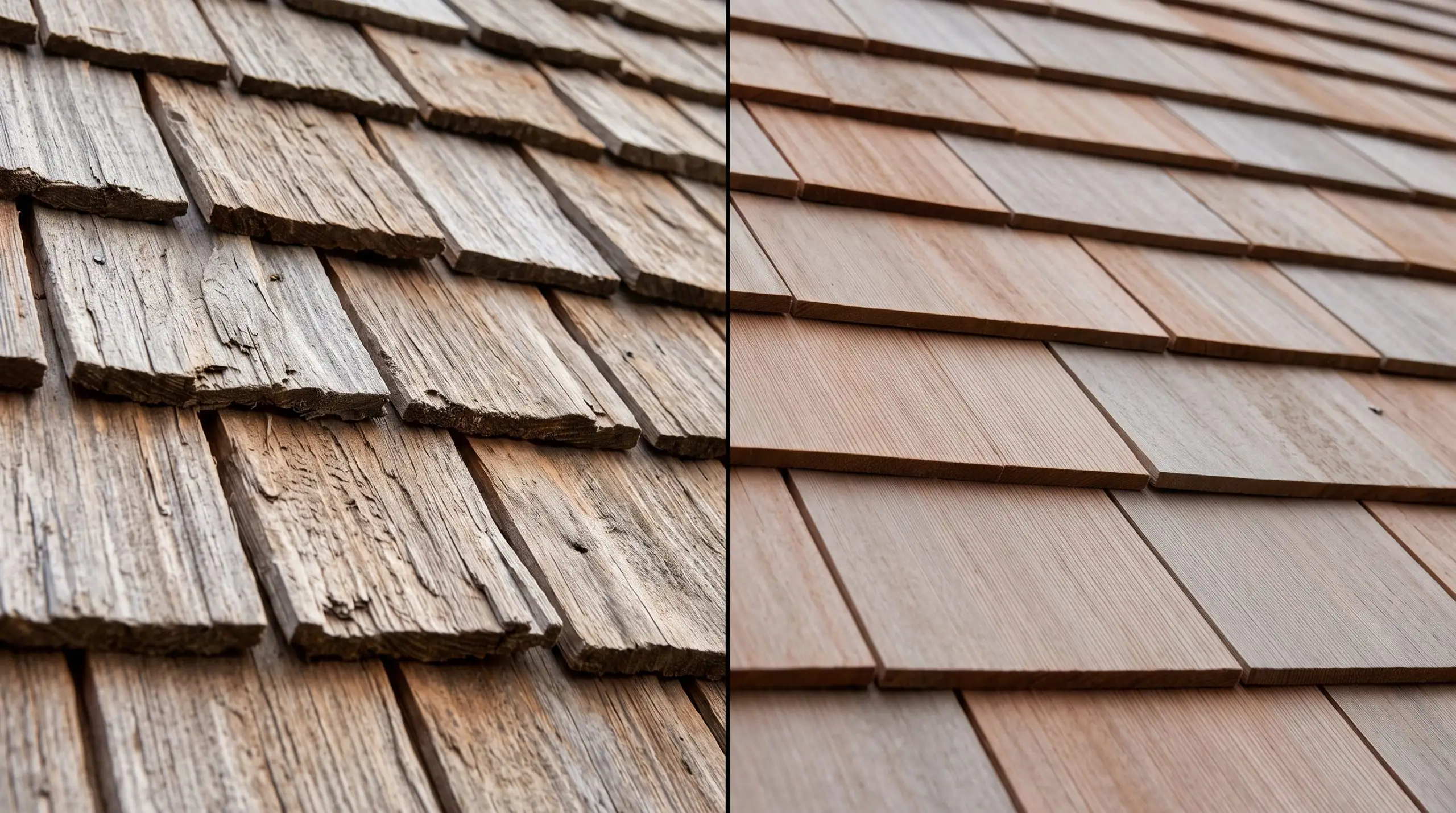
Cedar Shakes vs Cedar Shingles — What’s the Difference?
Cedar Shakes
Cedar shakes are split — either by hand or by machine — from straight-grained cedar blocks. The splitting process creates a rough, textured surface on one or both faces that gives shakes their distinctive rustic appearance and pronounced shadow lines. Hand-split shakes are thicker and more varied in texture; machine-split (also called hand-split and resawn) shakes have one rough and one smooth face. Shakes are typically thicker than shingles and create a heavier, more dimensional roofline.
Cedar Shingles
Cedar shingles are sawn on both faces to produce a smooth, tapered profile. They’re thinner and more uniform than shakes, creating a cleaner, more refined roofline that suits traditional craftsman and colonial architectural styles. Both shakes and shingles are available in multiple grades; we install No. 1 Blue Label and premium grades appropriate for Greater Seattle’s weather exposure.
Why Cedar Works in the Pacific Northwest
Western Red Cedar — the species used in virtually all Pacific Northwest cedar roofing — contains natural oils (thujaplicins) that inhibit rot, insect activity, and fungal growth. This makes it one of the few natural materials that genuinely performs in the damp conditions common in Greater Seattle. When properly installed and maintained, cedar delivers:
- A typical lifespan of 25 to 40 years in the Pacific Northwest climate
- Natural insulating value approximately two times that of asphalt shingles
- Dimensional stability through seasonal moisture changes
- A natural appearance that complements Greater Seattle’s wooded, natural environment
Cedar Roofing Installation Details That Matter in Greater Seattle
Underlayment and Breathability
Cedar must breathe. Solid felt or synthetic underlayment installed directly beneath cedar shakes or shingles traps moisture against the back of the wood, accelerating decay from beneath. We install breathable underlayment systems — including interlayment between courses of shakes where required — that allow air circulation beneath the cedar while maintaining waterproofing at the roof surface.
Proper Spacing and Exposure
Cedar shakes and shingles must be installed with appropriate spacing between adjacent pieces to allow lateral expansion and drying. Shakes butted too tightly against each other in Greater Seattle’s wet climate retain moisture and begin to decay at the joints. We install cedar to the spacing specifications required by the grade and exposure of the material.
Ventilation
An adequately ventilated attic extends the life of a cedar roof by reducing the moisture load on the underside of the sheathing and the backs of the shakes. We assess attic ventilation as part of every cedar installation and address deficiencies before the new cedar system goes on.
Corrosion-Resistant Fasteners
Cedar contains natural tannins that react with standard steel fasteners, causing corrosion and staining. We use stainless steel or hot-dipped galvanized nails for all cedar installations, the correct specification for Pacific Northwest conditions.
Common Cedar Roofing Problems in Greater Seattle — and How We Address Them
Moss and Algae Growth
Cedar’s natural surface texture provides an ideal substrate for moss and algae growth in Greater Seattle’s damp, shaded conditions. Moss retains moisture against the cedar surface, accelerating decay and reducing the roof’s remaining lifespan. Regular cleaning, using low-pressure washing and appropriate moss treatments, and the application of zinc strips at the ridge help control biological growth. We assess moss coverage during inspections and recommend cleaning schedules appropriate for your specific property and tree canopy situation.
Checking and Cracking
Cedar naturally checks, develops surface cracks along the grain, as it weathers through wet and dry cycles. Minor checking is normal and does not affect performance. Deep, through-face cracks that extend the full thickness of the shake indicate advanced weathering and are a sign that replacement of affected sections is approaching. We assess checking depth during inspections to distinguish normal weathering from advanced deterioration.
Cupping and Curling
Cedar shakes and shingles can cup, develop a concave profile, when they dry too rapidly from the top surface while remaining moist underneath. This occurs most commonly in areas with high sun exposure on roofs with inadequate ventilation. Cupped shakes lose their water-shedding profile and allow moisture to penetrate at the butt edges. Cupping is an indication that ventilation or exposure issues need to be addressed alongside any repair work.
End-Grain Decay
The butt ends of cedar shakes are the most vulnerable point, end grain absorbs moisture readily. In Greater Seattle’s wet climate, end-grain decay at the butt of improperly maintained shakes is one of the most common failure modes. Proper installation height, good drainage off the roof, and regular maintenance cleaning all extend the life of the butt ends.