
Roof tile is one of the oldest roofing materials in the world, and one of the most durable. Clay tile roofs from the Mediterranean and Central America have remained functional for centuries. In Greater Seattle, tile roofing offers homeowners a distinctive architectural presence, exceptional longevity, and fire resistance that few other materials can match. For homes where the roofline defines the character of the property, tile is often the specification that sets it apart.
Integrity Roofing & Construction installs clay and concrete tile roofing systems throughout Greater Seattle. Tile installation requires specific structural knowledge, fastening expertise, and flashing details that differ meaningfully from lighter roofing materials. We bring that expertise to every tile project, backed by our 20-year workmanship warranty and full Washington State licensing and insurance.
Interested in tile roofing for your Greater Seattle home? Contact Integrity Roofing & Construction for a free estimate.
Types of Tile Roofing We Install
Concrete Tile
Concrete tile is the most commonly installed tile roofing product in the Pacific Northwest. It’s more affordable than clay, available in a wide range of profiles and colors, and performs well in Greater Seattle’s climate. Concrete tile typically carries a 40 to 50-year lifespan and offers a Class A fire rating. It’s heavier than clay tile, which requires structural verification before installation.
Clay Tile
Natural clay tile is fired at high temperatures, producing a material that is denser, less porous, and more resistant to freeze-thaw cycling than concrete tile. Clay tile typically carries a lifespan of 50 to 100 years. Its natural variation in color and texture gives it an authentic character that concrete approximates but doesn’t fully replicate. Clay tile is the premium option for homeowners seeking maximum longevity and a traditional Mediterranean, Spanish, or Southwest aesthetic.
Flat Tile (Low-Profile)
Flat or low-profile tile offers a more restrained architectural appearance that suits contemporary and craftsman-influenced homes. It’s available in both clay and concrete and provides the same longevity and fire resistance as traditional curved tile profiles with a more understated visual footprint.
Why Tile Performs Well in Greater Seattle
Tile roofing has specific advantages in the Pacific Northwest climate that make it a compelling long-term investment:
- Non-porous surface — concrete and clay tile do not absorb water, eliminating the moisture retention issues that affect wood and some asphalt products
- Moss and algae resistance — the hard, smooth surface of tile is less hospitable to biological growth than rougher roofing materials, though Greater Seattle’s conditions can still support some growth over time
- Freeze-thaw resistance — properly manufactured tile rated for freeze-thaw cycling (required in the Pacific Northwest) does not crack or spall through seasonal temperature changes
- Class A fire rating — both clay and concrete tile are non-combustible, the highest fire resistance rating available
- Longevity — 50 to 100 years for clay, 40 to 50 years for concrete, represents the best value per year of any roofing material in this price range
What Tile Roofing Installation Requires
Structural Assessment
Concrete tile weighs 900 to 1,200 pounds per square; clay tile runs 850 to 950 pounds per square, significantly more than asphalt at 200 to 400 pounds. Before any tile installation, the roof framing must be assessed to confirm it can carry the load. On existing homes being re-roofed with tile, this assessment may reveal that additional structural reinforcement is required. We conduct this assessment as part of the pre-installation process and coordinate with a structural engineer when required.
Proper Underlayment for Tile Systems
Tile roofing systems require a two-layer underlayment, typically a base sheet and a cap sheet, that provides redundant waterproofing beneath the tile. The underlayment is the actual water barrier; the tile above it sheds water and protects the underlayment from UV and physical damage. Underlayment quality and correct installation are critical to the tile system’s long-term performance.
Correct Fastening and Battens
Depending on the tile profile, slope, and local wind exposure, tile may be installed over battens, horizontal strips of wood that hold the tile at the correct angle, or directly to the deck. Tiles in high-wind areas must be individually fastened rather than relying on gravity alone. We assess the specific conditions of each installation and fasten accordingly.
Flashing at Valleys, Penetrations, and Edges
Tile roofing requires precise flashing at valleys, hips, ridges, and all penetrations. Open valley flashing in metal, typically aluminum or copper, is common in tile installations. Hip and ridge tiles require mortar or foam-set installation at terminations. We install all tile flashings to manufacturer specifications and local code requirements.
Common Tile Roofing Issues in Greater Seattle — and How We Address Them
Cracked or Broken Tiles
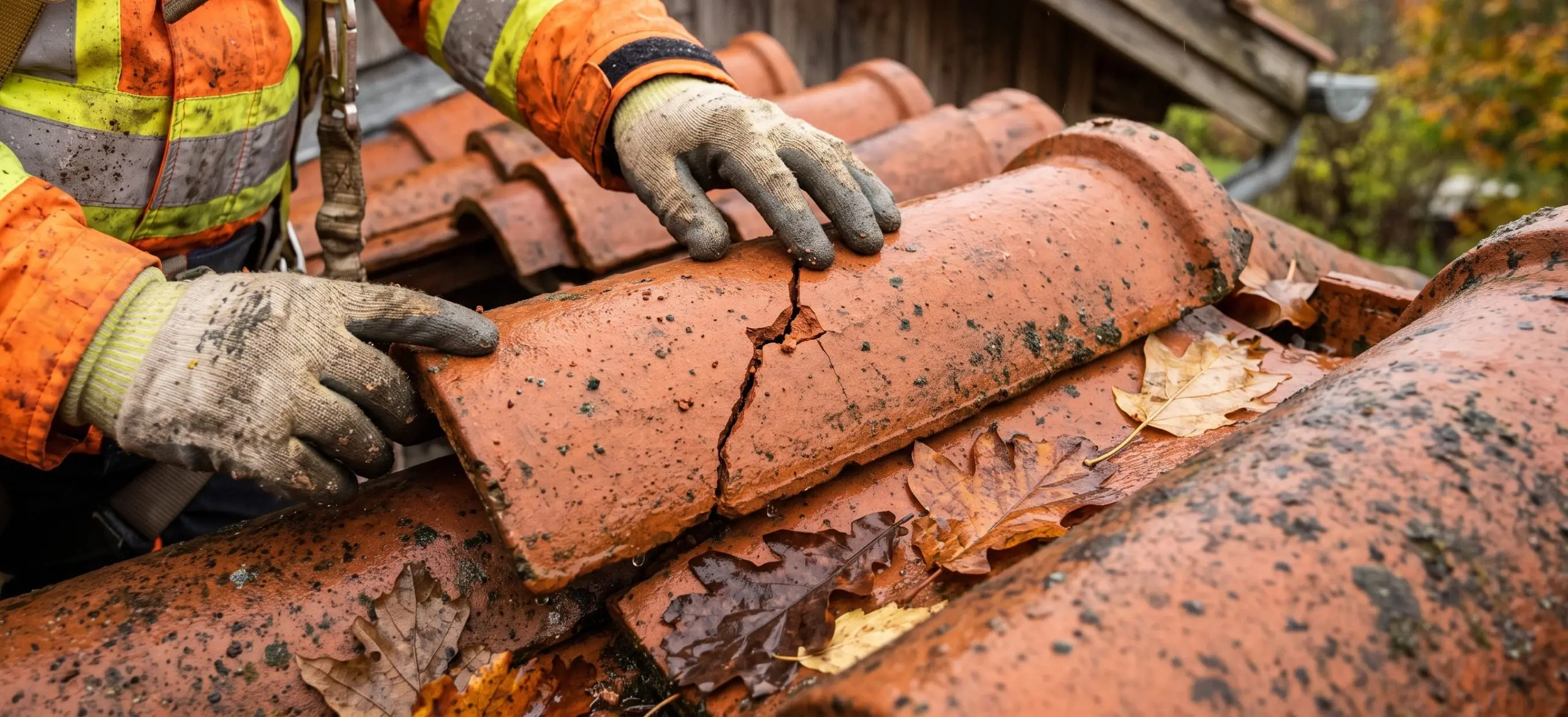
Individual tile tiles can crack from impact, falling branches are the most common cause in Greater Seattle’s wooded environment, or from foot traffic by untrained contractors walking directly on the tiles. A cracked tile allows water to reach the underlayment. We replace cracked tiles by carefully removing the damaged piece and sliding a replacement into position without disturbing adjacent tiles.
Moss and Biological Growth
While tile is more resistant to moss than wood or asphalt, Greater Seattle’s damp, heavily shaded conditions can support moss growth on tile surfaces, particularly in the mortar at ridges and hips and in the valleys between tile courses. Moss in these areas retains moisture and can degrade mortar over time. Periodic cleaning and treatment with appropriate biocides controls growth without damaging the tile surface.
Failed Mortar at Ridges and Hips
Ridge and hip caps on tile roofs are traditionally set in mortar. Over time, particularly in a climate with significant rainfall and temperature cycling, mortar joints crack and loosen, allowing water to penetrate behind the cap tiles. Re-mortaring and re-bedding of ridge and hip caps is a common maintenance task on tile roofs more than 20 years old. We inspect all mortar conditions during annual service visits.
Underlayment Failure Before Tile
On older tile roofs where the tile itself remains in good condition, the underlayment beneath it may have failed, particularly if it was installed with a standard 15-pound felt that has since deteriorated. Underlayment failure shows up as widespread leaking that isn’t associated with any single cracked tile or flashing failure. Addressing this requires carefully removing the tile, replacing the underlayment, and reinstalling the original tile, a labor-intensive but cost-effective alternative to full tile replacement.
Frequently Asked Questions About Tile Roofing in Greater Seattle
Is my home structurally adequate for tile roofing?
Many homes in Greater Seattle were not originally designed for tile’s additional weight and will require a structural assessment before installation. We conduct this assessment as part of the pre-installation process. Where reinforcement is needed, we coordinate the structural work before proceeding with the tile installation.
How does tile roofing handle Greater Seattle’s freeze-thaw cycles?
Tile rated for freeze-thaw resistance — specified as Grade 1 or with a freeze-thaw rating — performs very well in Greater Seattle’s climate. It’s important to verify that the specific tile product is rated for freeze-thaw conditions; not all tile products are, and unrated tile can spall in climates with regular freezing temperatures. We specify freeze-thaw-rated products for all Greater Seattle installations.
Can broken tiles be replaced individually?
Yes. One of tile roofing’s advantages over some other premium materials is that individual broken tiles can be replaced without disturbing the surrounding installation. This makes repair relatively straightforward when damage is isolated.
Does tile roofing require special maintenance in Greater Seattle?
Tile roofing requires less maintenance than cedar but more than metal. Annual inspections to check for cracked tiles, assess mortar conditions at ridges and hips, and evaluate moss growth are the primary maintenance tasks. We offer annual service programs for tile roofs throughout Greater Seattle.
What warranty does Integrity Roofing provide on tile installations?
All tile roofing installations are covered by our 20-year workmanship warranty. Tile material warranties vary by manufacturer; concrete tile manufacturers typically offer 30 to 50-year limited warranties. We provide full warranty documentation for every installation.
Ready for a tile roof that will last for decades? Contact Integrity Roofing & Construction for a free estimate in Greater Seattle.