



By Kes Anderson
Ceiling stains always seem to show up at the worst time. One day the ceiling looks fine, then suddenly there is a yellow or brown ring that makes you wonder if something is actively leaking above you. Most homeowners assume it’s a straightforward roof leak, but that is not always how it plays out.
At Integrity Roofing & Construction, we see these situations constantly, especially in the Pacific Northwest where heavy rain and long wet seasons expose weaknesses in roofing systems over time. The part that surprises people is how often the stain inside the home is not sitting directly under the actual source of the moisture.
Water moves in ways most homeowners do not expect. It can enter in one location, travel along framing, and show up somewhere completely different. Sometimes it’s roofing related, sometimes it’s ventilation, and sometimes it’s a combination of both.
Understanding how ceiling stains actually form is the first step to figuring out what is really going on.
Ceiling Stains Do Not Always Mean an Active Roof Leak
A common assumption is that any water stain on a ceiling means the roof is currently leaking. That is not always the case.
In a lot of homes we inspect, the stain is tied to condensation in the attic. Warm air rises from the living space, hits cold roof decking, and turns into moisture. That moisture can drip slowly over time and create staining that looks identical to a roof leak.
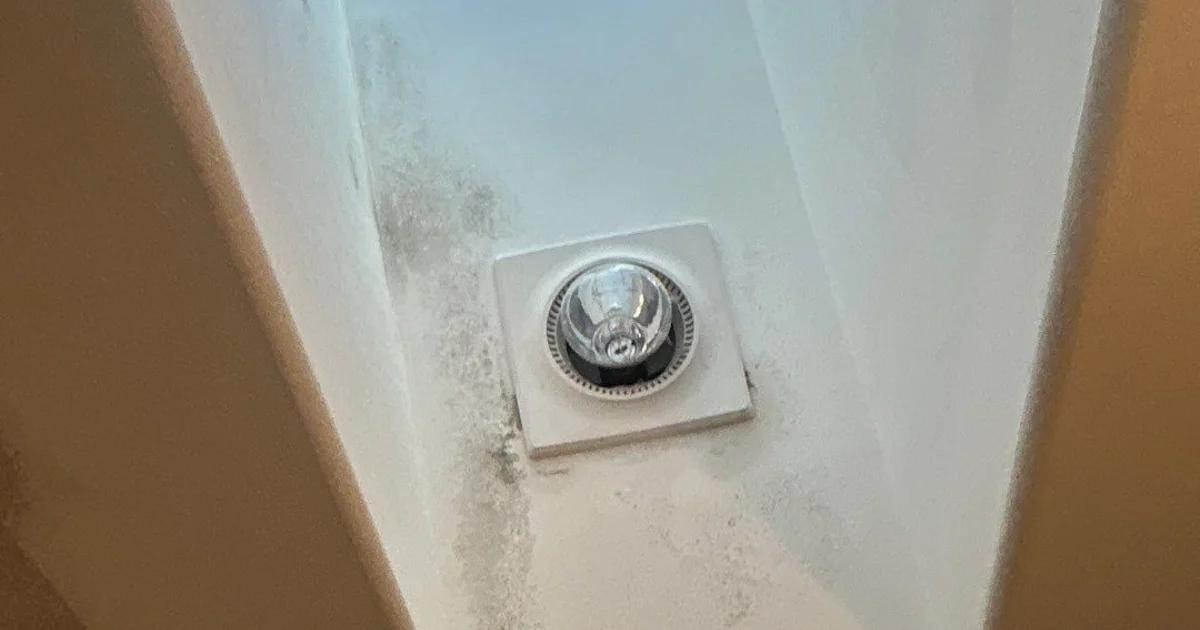
We also run into situations where bathroom fans are venting directly into the attic instead of outside. That pushes humid air into a cold space where it has nowhere to go. Over time, that moisture builds up and creates staining without a single hole in the roof.
There are also cases where a leak happened in the past, was repaired, but the stain never fully went away. Drywall and wood framing hold onto discoloration long after the moisture source is gone, which makes homeowners think the problem is still active.
This is why guessing from the inside of the house alone usually leads people in the wrong direction.
How Water Moves Before You Ever See a Ceiling Stain
One of the hardest things for homeowners to understand is that water does not move in a straight line once it enters a roof system.
It can get in at a small opening and then follow roof decking seams, nail lines, or structural framing before it finally shows up inside the home. By the time you notice a stain, the actual entry point can be several feet away.
We see this often in homes with complex rooflines. Valleys, dormers, and wall transitions all create natural paths where water can travel. It is not unusual for a stain in a bedroom ceiling to originate from a roof penetration on a completely different section of the roof.
Wind-driven rain in the Tacoma area makes this even more noticeable. Water does not always fall vertically during storms. It can be pushed under lifted shingles or into small gaps that only open under certain weather conditions.
That is why surface-level roof checks often miss the real issue. You have to trace the moisture path, not just look at the spot above the stain.
The Most Common Sources Behind “Mysterious” Ceiling Stains
Most ceiling stains come from a short list of repeat problems we see over and over again in the field. In most cases, it is not a single dramatic failure, but a combination of design choices and wear points that slowly allow moisture to build up inside the system.
Studies on modern roofing systems show that design choices like insulation placement, ventilation strategy, and roof penetrations can all increase the likelihood of moisture accumulation in attic spaces, especially when surface temperatures drop and condensation potential increases.
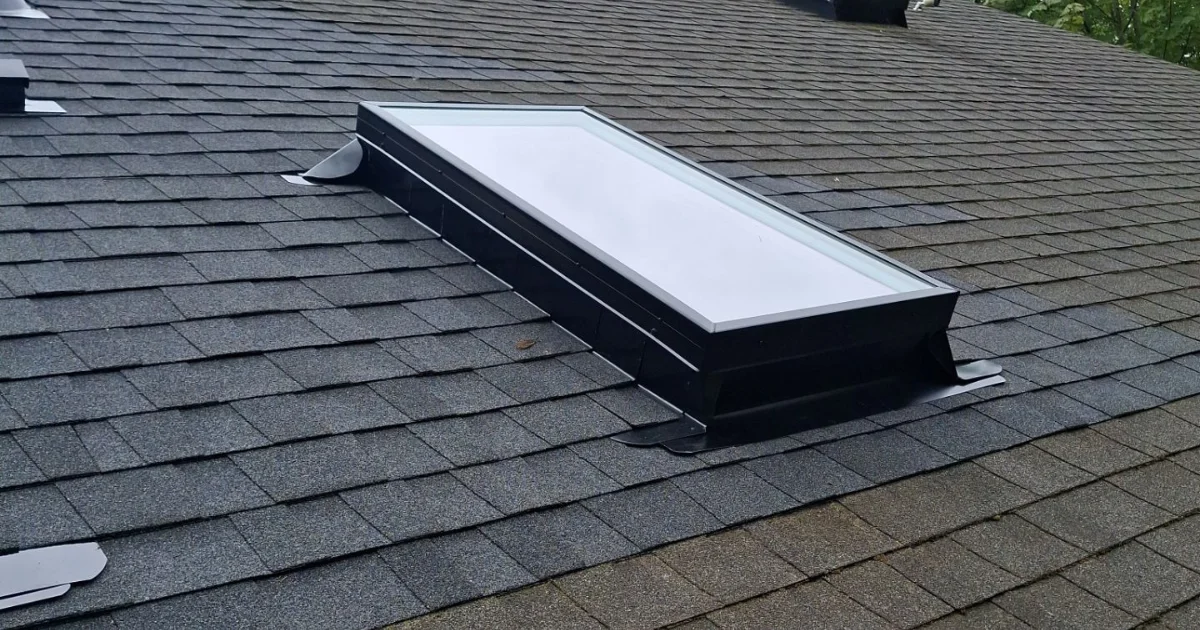
Flashing issues are near the top of that list. Chimneys, skylights, and roof-to-wall connections rely on properly installed flashing to direct water away from vulnerable areas. When flashing is aged, damaged, or poorly installed, water finds its way behind it and slowly works into the home.
Roof vent boots are another common failure point. These rubber seals wrap around plumbing vents and are exposed to constant UV and weather. Once they crack, even slightly, water can enter during steady rain and create slow, hidden leaks.
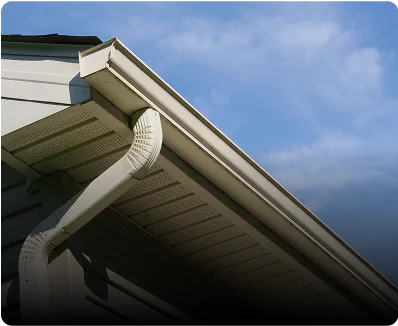
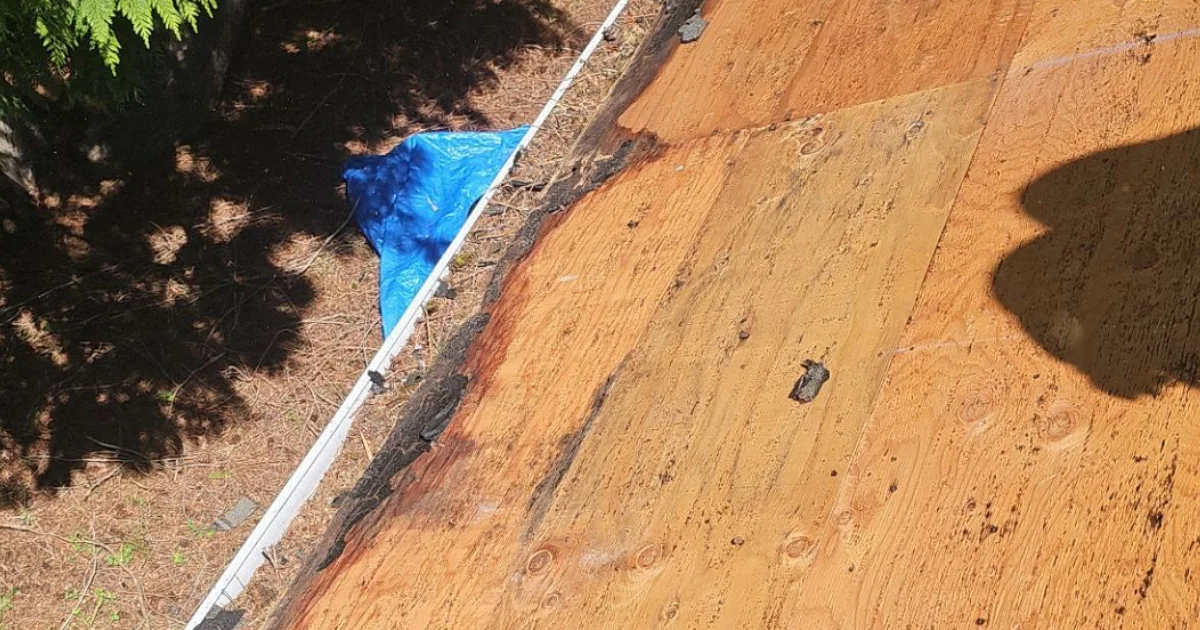
Gutters also play a bigger role than most people expect. When gutters clog and overflow, water can back up under the roof edge and begin affecting the decking near exterior walls. That often shows up as stains that feel unrelated to the roof surface itself.
We also see attic ventilation problems that create moisture from the inside out. When warm air is trapped in an attic, it condenses on cold surfaces and eventually drips down. That type of staining is especially common in older homes or homes with incomplete ventilation systems.
Most of these issues start small. They do not fail all at once, which is why stains often feel random when they first appear.
Why Ceiling Stain Diagnosis Is Hard to Get Right Without Experience
Most homeowners start by looking directly above the stain and assuming the problem is right there. That is the most common mistake.
Roof leaks rarely respect that straight up and down logic. The actual entry point is often offset due to how water moves through roofing materials and framing.
Another issue is timing. Many leaks only show up during specific conditions like heavy wind or prolonged rain. If you inspect the roof on a dry day, you are not seeing the same conditions that caused the stain in the first place.
Quick patch attempts also create confusion. Sealing a visible spot without understanding the full moisture path can temporarily redirect water and make the problem appear solved, when it is actually still active elsewhere.
The most reliable approach is starting in the attic when possible. Look for dark staining on wood, damp insulation, or visible moisture trails. Then work outward to the roof surface instead of guessing from above.
That process takes more time, but it’s the only way to avoid chasing the wrong problem.
When Ceiling Stains Point to a Bigger Roofing Issue
A single stain is not always a major concern, but patterns are worth paying attention to.
If stains keep returning in the same general area, or if multiple areas of the ceiling begin showing discoloration, there is usually a deeper issue in the roofing system or ventilation setup.
In the Pacific Northwest, it’s common to find a combination of aging roofing materials, small flashing failures, and attic ventilation problems all contributing at the same time. None of them may look serious on their own, but together they create ongoing moisture issues.
This is where a full roof evaluation becomes important. Not just a surface inspection, but a look at how the entire system is handling water and airflow.
At Integrity Roofing & Construction, we approach ceiling stains by tracing the source instead of reacting to the symptom. That usually leads to a clearer understanding of what is actually happening and prevents repeated repairs that do not hold.
If you’re dealing with a ceiling stain that does not make sense or keeps coming back, it’s worth having it properly looked at. You can reach Integrity Roofing & Construction at 360-900-7663 to set up an inspection or talk through what you are seeing. You can also fill out our online form to get in touch.