

by Nathan Maille
T1-11 siding had a moment.
For decades, it was a popular choice on homes, shops, barns, and outbuildings across the Pacific Northwest. It was affordable, fast to install, and gave a clean, simple look. A lot of houses we work on in Kitsap, Pierce, and Mason counties still have it.
But time has not been kind to T1-11. And if you have it on your home today, there is a good chance it is already failing, even if it looks fine from the driveway.
We see this every week. Homeowners call us for a roof estimate, a window replacement, or trim repair. Once we get closer, the real problem shows itself. The siding is soft, swollen, or actively feeding water into the wall system.
What T1-11 Siding Actually Is
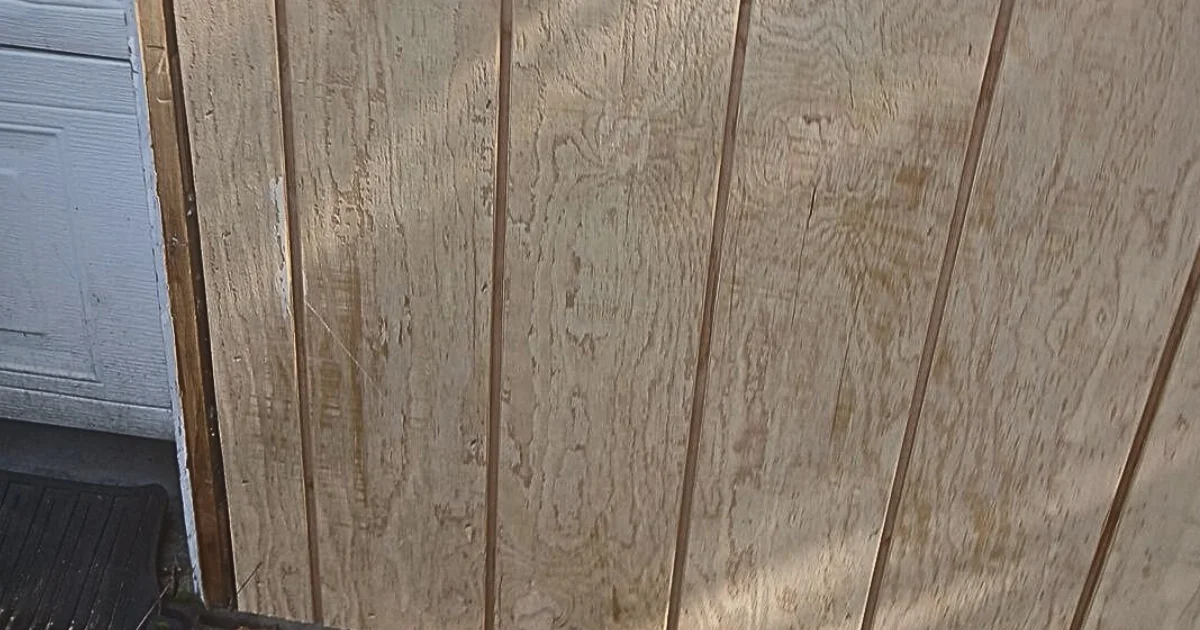
T1-11 is a plywood-based siding panel, typically installed in 4×8 sheets. The vertical grooves are routed into the face to mimic the look of board-and-batten or vertical planks. In wet climates like Western Washington, plywood-based siding struggles to dry once moisture gets in, which is why modern guidance on moisture-resistant exterior siding systems strongly favors products that manage bulk water and drying potential.
The problem is not the look. The problem is the material.
T1-11 relies on paint and caulking to keep water out. When that coating fails, moisture has a direct path into the plywood layers. In Western Washington, where siding stays damp for long stretches of the year, that moisture does not dry out quickly.
Once water gets in, the clock starts ticking.
Signs Your T1-11 Siding is Already Failing
Some signs are obvious. Others are easy to miss unless you know what to look for.
Common red flags we see on inspections include:
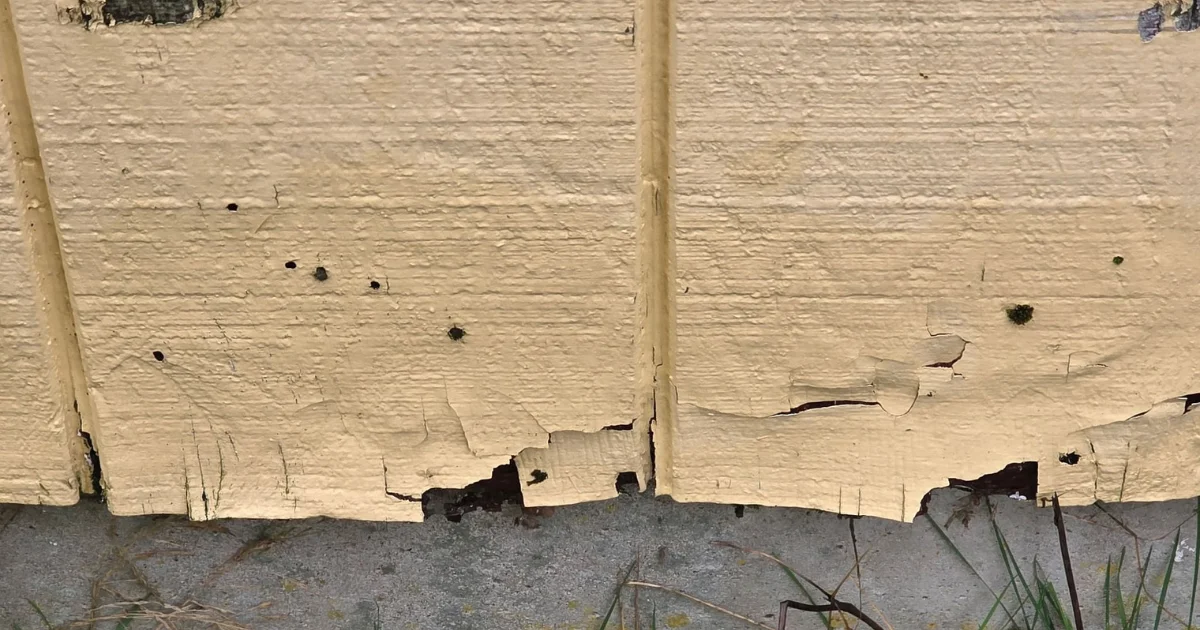
- Swelling or bubbling along the bottom edge of panels
- Vertical cracks along the grooves
- Soft spots you can press with a finger or screwdriver
- Peeling paint that returns quickly after repainting
- Dark staining at panel seams or near trim
The most concerning damage usually starts at the bottom. T1-11 siding was often installed too close to grade or roofing surfaces. Once it wicks moisture from soil, concrete, or roof runoff, the lower edge becomes a sponge.
By the time rot shows on the surface, the back side of the panel is often far worse.
Why Repainting is Usually a Short-term Fix
We hear this a lot: “Can’t we just scrape it and repaint?”
Sometimes, repainting buys you time. But it does not reset the clock.
Paint does not stop rot that has already started. It just hides it for a while. We have removed freshly painted T1-11 siding that looked great from the street and found extensive decay behind it.
If the siding is swelling, delaminating, or pulling fasteners loose, paint will not solve the underlying problem. It often makes the eventual replacement more expensive because the damage continues unchecked.
How T1-11 Siding Failures Lead to Bigger Problems
This is where waiting really hurts homeowners.
Failing T1-11 siding does not just affect the siding. It allows water into wall cavities. That moisture can damage:
- Wall sheathing
- Insulation
- Framing
- Windows and doors
- Interior drywall and finishes
We regularly open walls and find rot that started years earlier at the siding line. What could have been a planned siding replacement turns into structural repairs, window reframing, and mold remediation.
That is why we often say homeowners should have replaced it five years ago. Not as a judgment, but because T1-11 rarely fails all at once. It fails slowly, quietly, and expensively.
When Replacement Makes More Sense Than Repair
In our experience, replacement is usually the right call when:
- The panels are more than 20 to 25 years old
- There is visible swelling or rot at the bottom edges
- Paint fails again within a year or two
- You are already replacing windows or roofing
- You plan to own the home long-term
Replacing siding during other exterior projects often saves money and prevents rework. It also allows us to address flashing, weather barriers, and trim details correctly.
Better Siding Options for Western Washington
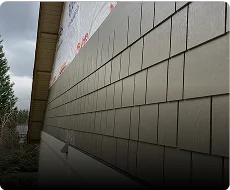
The good news is that modern siding products perform far better than old T1-11 ever did.
Common replacements we install include:
- Fiber cement panel or lap siding
- Engineered wood siding with sealed edges
- Cedar, when detailed correctly and maintained
These systems handle moisture better, hold paint longer, and integrate properly with modern weather barriers. Most importantly, they protect the structure of your home instead of relying on paint as the first line of defense.
The Real Cost of Waiting
T1-11 siding replacement is not just about curb appeal. It is about protecting the bones of your house.
When homeowners wait too long, the scope grows. What starts as siding becomes framing. Framing becomes interior repairs. Interior repairs disrupt daily life and drive costs up fast.
Addressing failing T1-11 siding early almost always costs less than dealing with the damage it causes later.
Our Approach to T1-11 siding Replacement
When we replace T1-11 siding, we do more than remove panels and install new ones.
We inspect the wall assembly, repair any damaged framing or sheathing, upgrade weather barriers, and correct clearance and flashing issues that caused the failure in the first place.
That way, the new siding is not just better looking. It is set up to last.
If you have T1-11 siding on your home and are starting to see signs of trouble, it is worth having it looked at sooner rather than later. Even if replacement is not urgent yet, understanding the condition helps you plan instead of react. Either give us a call at 360-900-7663 or fill out our online form to get started today.