



By Nathan Maille
Most homeowners don’t think much about dry-in deck soffit options until the space under their deck becomes usable.
Once you’ve installed a dry-in system and water is being directed away, everything changes. That area underneath goes from damp and overlooked to a space you can actually use. Storage, a covered patio, or even a full outdoor living area.
That’s when the next decision shows up. Which option actually make sense for your home?
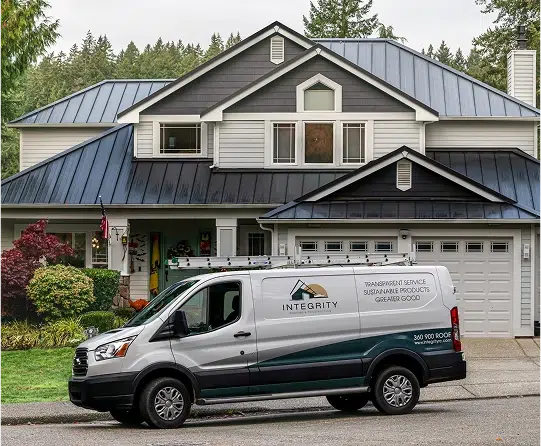
At Integrity Roofing & Construction, this is where a lot of homeowners get stuck. The drainage system is working, but choosing the right soffit finish feels less clear. The good news is once you understand how each option performs, the decision becomes a lot easier.
Why Dry-In Deck Soffit Options Matter More Than You Think
Choosing between different dry-in deck soffit options isn’t just about appearance. It directly affects how that space holds up over time.
Even with this system, you’re still dealing with moisture, airflow limitations, and temperature changes. ASHRAE guidance on moisture control in building assemblies emphasizes that controlling moisture is essential for long-term durability and preventing structural damage.
Soffits aren’t just cosmetic—they play a key role in airflow, and understanding how soffit ventilation supports moisture control helps explain why the right material choice matters long term.
If the material can’t handle those conditions, you’ll start seeing sagging, staining, or breakdown much sooner than expected.
Vinyl Panels: One of the most common dry-in deck soffit options
Vinyl is one of the most widely used dry-in deck soffit options, especially for homeowners who want something simple and low maintenance.
It handles moisture well, won’t rot, and is relatively cost-effective.
We install this often on projects where function matters more than creating a high-end finished ceiling.
Vented vinyl panels can also help improve airflow, which is important in damp environments like the Pacific Northwest.
The tradeoff is appearance. It looks clean, but it doesn’t always give that finished outdoor living feel.
Tongue and groove wood: a warmer dry-in deck soffit option
If you’re trying to elevate the space, wood is one of the more visually appealing dry-in deck soffit options.
Tongue and groove boards create a finished ceiling that feels more like an extension of the home.
Cedar is a common choice because of its natural resistance to moisture, but even then, maintenance matters.
Wood soffits need to be sealed and maintained properly. Without that, exposure to humidity can lead to movement, discoloration, or early wear.
This option works best for homeowners who prioritize appearance and are willing to maintain it.
aluminum systems: a durable option
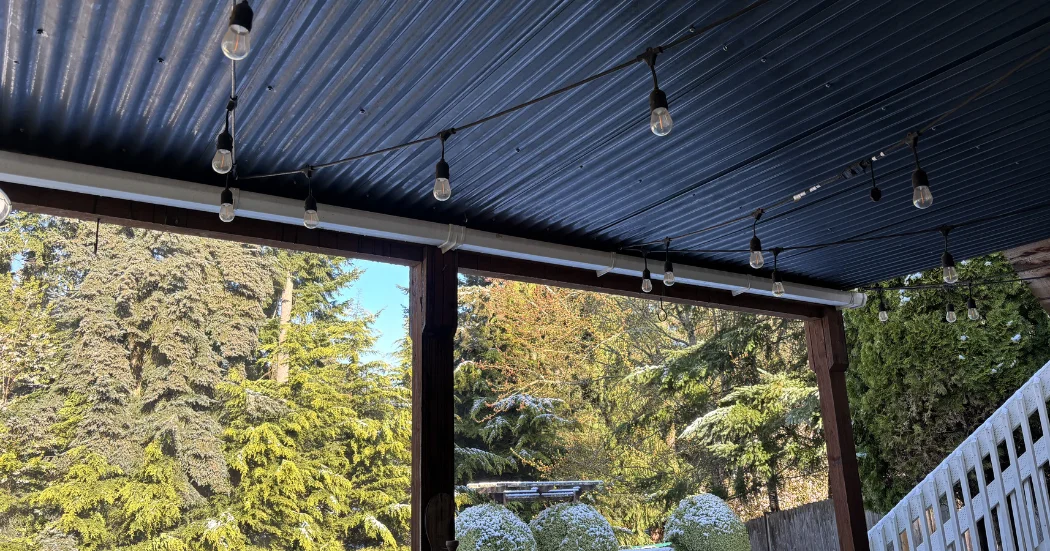
Aluminum is one of the more durable dry-in deck soffit options, especially in areas that stay damp.
It doesn’t absorb moisture, won’t rot, and holds its shape better over time compared to vinyl.
We typically recommend aluminum when longevity is the priority and the space doesn’t get a lot of natural drying from sunlight.
It’s not as decorative as wood, but it performs consistently in tougher conditions.
composite and pVC panels: low-maintenance dry-in deck soffit options
Composite and PVC materials are becoming more popular dry-in deck soffit options for homeowners who want both durability and a more finished look.
These materials resist moisture, don’t require painting, and hold up well over time.
They’re a strong middle-ground option. You get a cleaner appearance than vinyl without the maintenance concerns of wood.
The upfront cost is higher, but many homeowners prefer the long-term simplicity.
Exposed framing: the simplest dry-in soffit option
Not every project needs a finished ceiling.
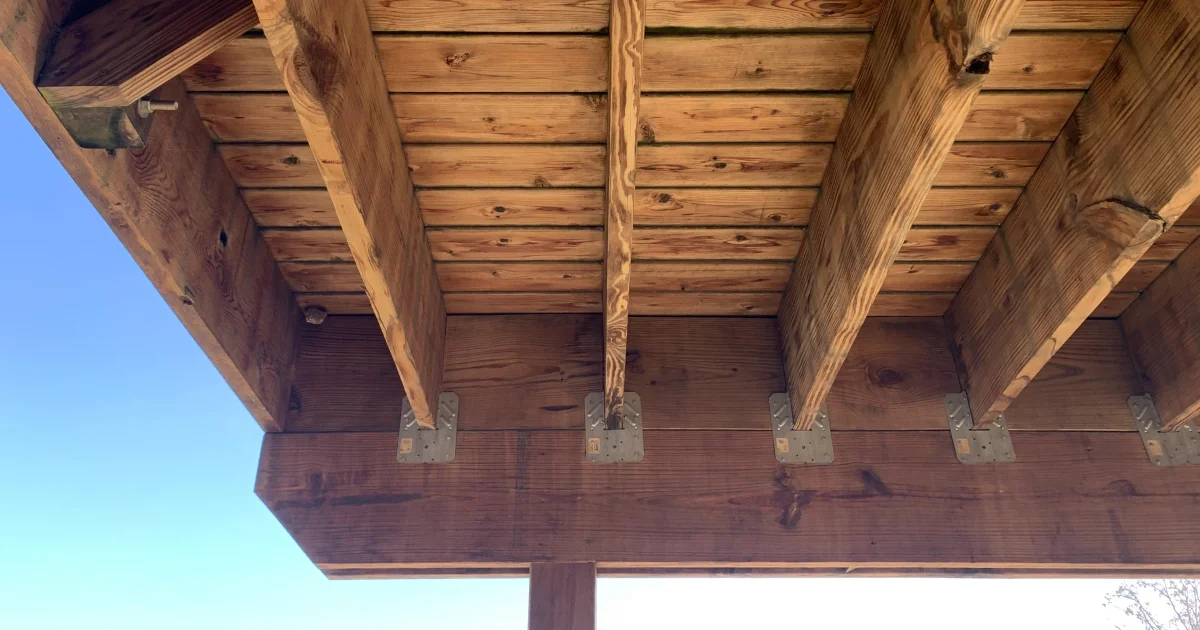
Leaving framing exposed is one of the simplest dry-in deck soffit options, especially for storage-focused spaces.
This approach keeps costs down and avoids overbuilding an area that doesn’t need it.
The tradeoff is visual. It won’t feel like a finished outdoor space, but it can work well depending on how you plan to use the area.
Planning ahead: lighting and functionality
No matter which dry-in deck soffit options you’re considering, planning ahead makes a big difference.
Lighting, fans, and wiring should be decided before installation.
Once the soffit is installed, adding those features becomes more difficult and can require cutting into finished materials.
This is where a lot of projects miss an opportunity to fully finish the space.
choosing the right dry-in deck soffit options for your home
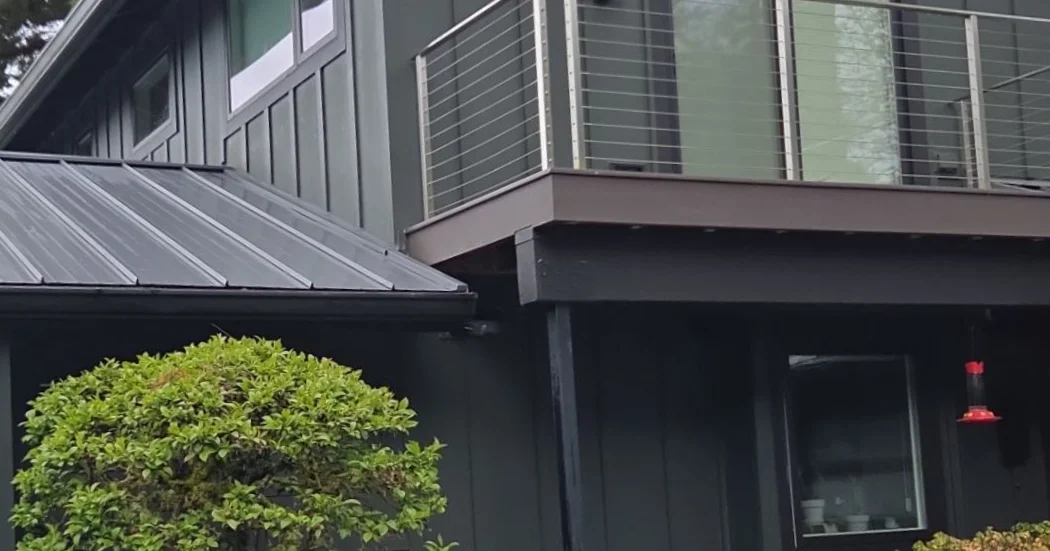
The best dry-in deck soffit options depend on how you plan to use the space.
If you want something simple and low maintenance, vinyl or aluminum usually makes sense.
If you’re building a more finished outdoor area, composite or wood may be the better fit.
The biggest mistake we see isn’t the material itself. It’s choosing an option that doesn’t match how the space will actually be used.
what to do next
Before choosing between different dry-in deck soffit options, take a step back and evaluate your space.
Think about moisture exposure, how often you’ll use the area, and how finished you want it to feel.
At Integrity Roofing & Construction, we walk homeowners through these decisions on-site so they don’t end up with something that looks good initially but doesn’t hold up.
If you’re working on finishing the space under your deck, call us at 360-900-7663. We’ll help you choose soffit options that actually fit your home and how you plan to use it. You can also fill out our online form.