



By Kes Anderson
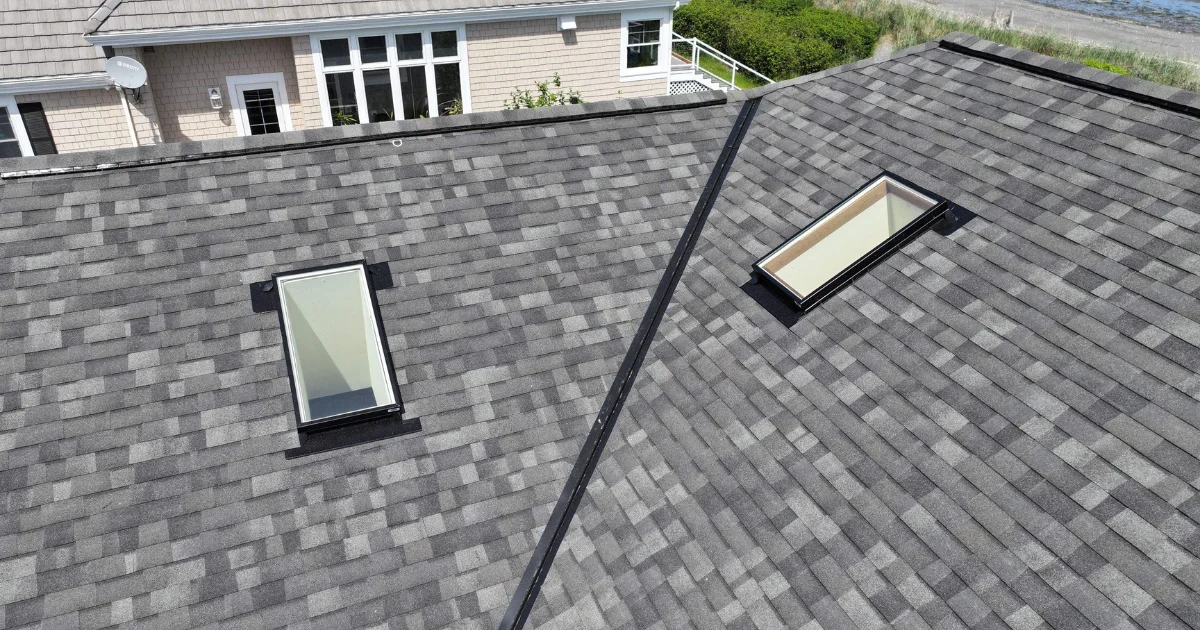
Skylights can completely transform a home.
They bring in natural light, make spaces feel larger, and add real value. But in the Puget Sound, skylights are often associated with problems.
Leaks. Condensation. Costly repairs.
Here’s the truth. Skylights do not fail on their own. Most skylight leaks and condensation issues come down to installation mistakes, poor ventilation, or shortcuts in the roofing system.
If you understand how skylights work and what causes these problems, you can avoid them completely.
Why Skylights In the PNW Are More Challenging
In Western Washington, your roof deals with constant moisture.
- Frequent rain
- High humidity
- Moss and debris buildup
- Limited drying time between storms
This environment exposes every weak point in your roof. Skylights are one of those critical areas because they interrupt the flow of your roofing system.
That is why skylight installation in the PNW has to be done differently. Small mistakes that might not show up in drier climates will show up quickly here.
Where Skylight Leaks Actually Start
Most homeowners assume skylight leaks come from the glass.
That is almost never the case.
Skylight leaks typically start at the connection points where the skylight meets the roof. This is where water is either controlled properly or allowed in.
The most common causes of skylight leaks include:
- Incorrect or missing flashing
- Poor integration with underlayment
- Roofing materials installed improperly around the skylight
- Aging or failed sealants
In the field, we often see skylights that were installed correctly at first, but the surrounding roof system failed over time. That failure eventually leads to a leak.
If you have read our breakdown of roofing system layers, this is where everything comes together.
The Role of Flashing in Preventing Skylight Leaks
Flashing is the single most important factor in preventing skylight leaks.
It is designed to direct water away from the skylight and safely back onto the roof.
A proper skylight flashing system includes:
- Step flashing along the sides
- Head flashing at the top
- Sill flashing at the bottom
Here is where many contractors get it wrong. They rely too heavily on sealants instead of proper flashing design.
Sealants fail over time. Flashing systems are built to manage water long-term.
In the Puget Sound, where rain is consistent, improper flashing will eventually lead to leaks. It is not a matter of if, it is when.
How Underlayment Protects Your Skylight
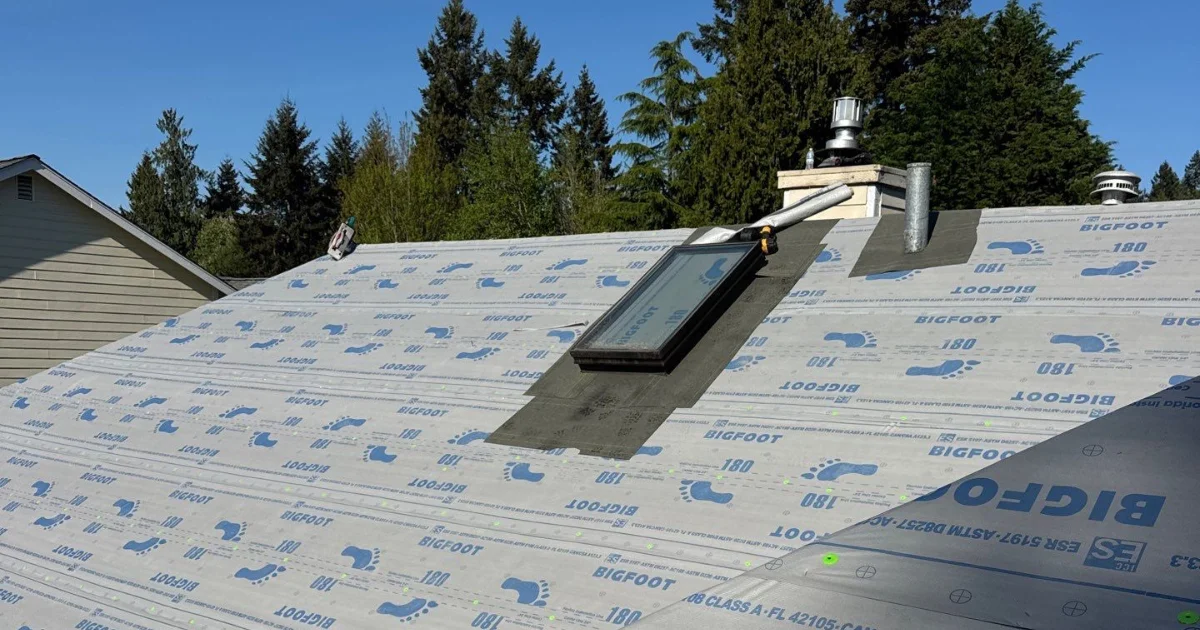
Underlayment is your secondary defense against water intrusion.
Around skylights, this layer becomes even more important because it acts as a backup when water gets past the outer roofing materials.
A proper skylight installation should include:
- Waterproof membrane wrapped around the skylight opening
- Ice and water shield extending beyond vulnerable areas
- Tight integration with the rest of the roofing system
One of the most common issues we see in Western Washington homes is missing or poorly installed underlayment around skylights.
When this layer is skipped or cut short, water can reach the roof deck quickly. Once that happens, you are no longer dealing with a simple skylight leak. You are dealing with rot, insulation damage, and potential interior repairs.
Why Skylight Condensation Happens
Not all water around a skylight is a leak.
Condensation is a separate issue, and it is very common in PNW homes.
Condensation forms when warm, moist indoor air hits a cooler surface like skylight glass. The moisture in the air turns into water droplets.
This is usually caused by:
- High indoor humidity
- Poor attic ventilation
- Temperature differences between inside and outside
In many cases, homeowners think their skylight is leaking when it is actually a ventilation problem.
How to Prevent Skylight Condensation
Preventing skylight condensation starts with controlling moisture inside your home.
Here is what actually works:
- Improve attic ventilation to allow proper airflow
- Use bathroom and kitchen exhaust fans consistently
- Keep indoor humidity levels in check
- Ensure the skylight shaft is properly insulated
Ventilation is critical. Without it, moisture builds up and has nowhere to go.
If you have read our blog on roof ventilation and building envelope performance, this is a key connection. Your skylight is part of a larger system, not an isolated feature.
The Importance of Proper Skylight Installation
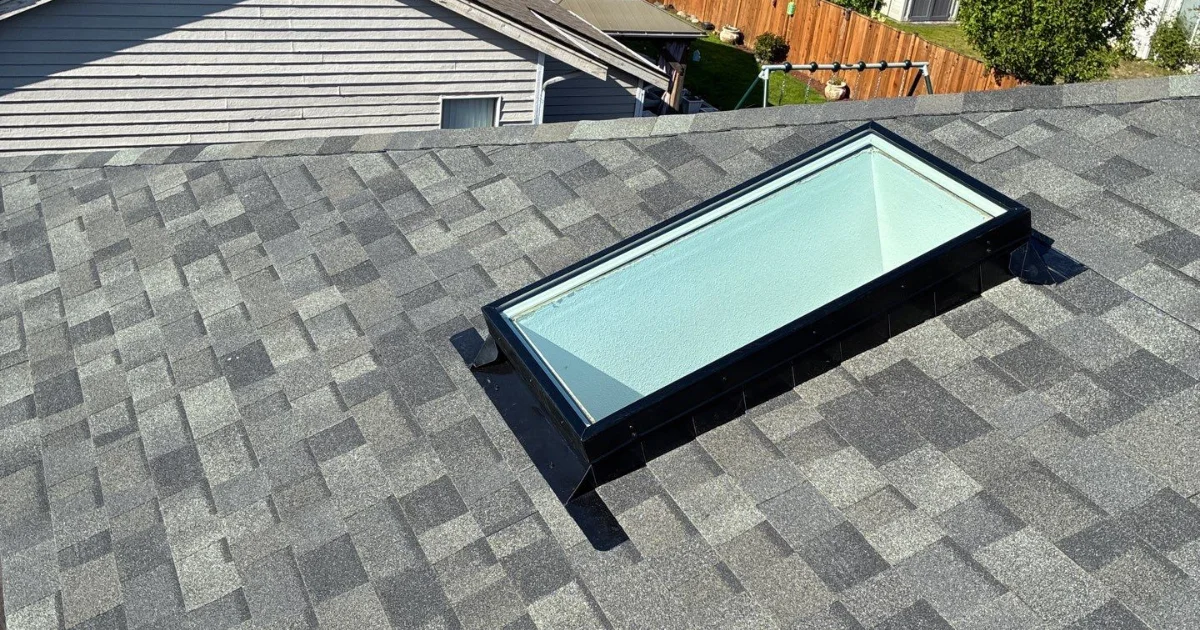
A skylight must be installed as part of a complete roofing system, especially since proper flashing and moisture control are critical to keeping water out of the home.
This is where many problems begin.
A proper skylight installation includes:
- Correct flashing integrated into the roofing system
- Full waterproof underlayment protection
- Proper fastening and sealing methods
- Alignment with roof slope and drainage paths
In real-world scenarios, we often see skylights installed during roof replacements where corners were cut to save time.
The result is predictable. Leaks within a few years, followed by costly repairs.
A properly installed skylight should perform just as reliably as the rest of your roof.
What This Means for Your Home
If you live in the Puget Sound and have a skylight, or are thinking about adding one, the takeaway is simple.
Skylights are not inherently risky. Poor installation is.
When skylights are installed correctly, with proper flashing, underlayment, and ventilation, they perform well even in high-moisture environments.
When shortcuts are taken, problems develop quickly.
The difference between a skylight that lasts decades and one that leaks often comes down to small details that most homeowners never see.
Addressing those details early protects your home from:
- Hidden water damage
- Mold and moisture issues
- Expensive interior repairs
Signs Your Skylight May Be Failing
If you are unsure whether your skylight is performing correctly, look for these warning signs:
- Water stains around the skylight
- Dripping during rain
- Condensation that does not go away
- Fogging between glass panes
- Peeling paint or drywall damage
These signs usually indicate a deeper issue within the roofing system.
Protect Your Skylight and Your Roof
Skylights can be a great addition to your home, even in the PNW.
The key is making sure they are installed and maintained correctly from the start.
If you are dealing with a skylight leak, condensation issues, or planning a new installation, it is important to look at the full roofing system, not just the skylight itself.
Call 360-900-7663 to schedule an inspection and make sure your skylight and roof are built to handle the conditions in Western Washington, or fill out our online form.