



By Kes Anderson
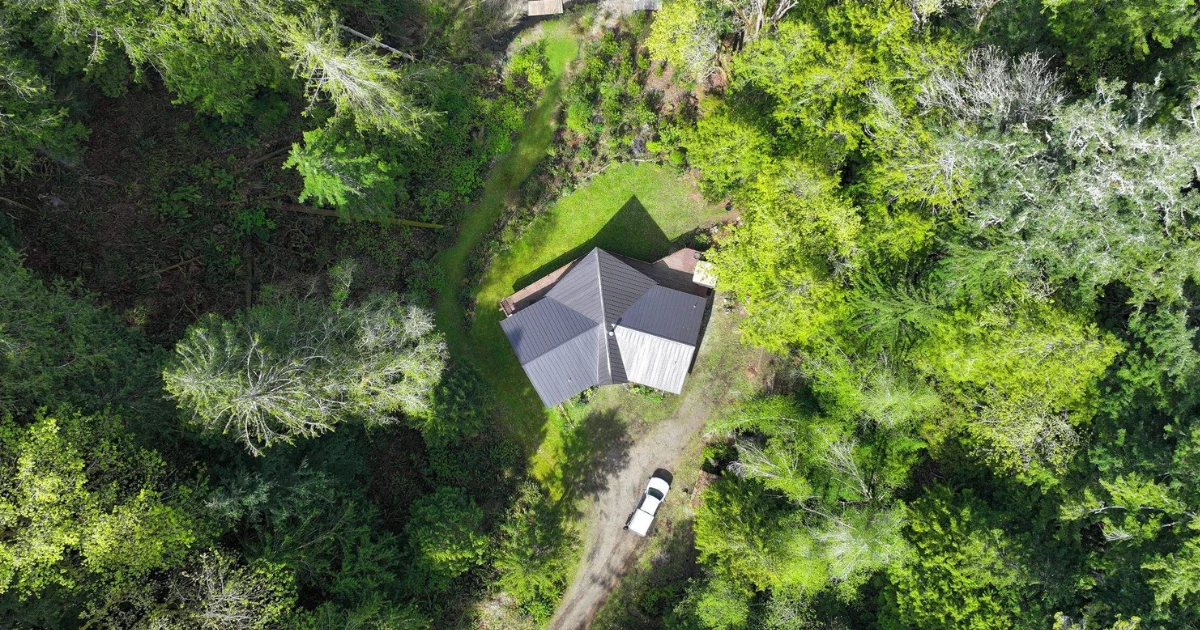
If you live in the Pacific Northwest, trees are part of the landscape. They add privacy, shade, and character to your property. But when it comes to your roof, those same trees can quietly create some of the most common and overlooked causes of roof damage.
Cedar, hemlock, and fir trees all drop debris that interacts with your roofing system in different ways. In a region known for steady rain, cool temperatures, and limited direct sunlight, that debris does not dry out quickly. Instead, it holds moisture against the roof and slowly changes how the entire system performs over time.
Before that buildup turns into real damage, it is worth understanding what is happening on your roof and what to look for.
Why Tree Debris Causes More Roof Damage in the Pacific Northwest
Roof damage from tree debris is not just about what falls on the roof. It is about what happens after it lands.
In the Pacific Northwest, roofs stay damp longer due to frequent rain, shaded conditions, and cooler temperatures. When organic debris collects on the surface, it prevents the roof from shedding water and drying properly.
In shaded, wet climates like the Pacific Northwest, roof organisms behave differently, and the Oregon State University Extension research on moss and lichen roof moisture retention shows that moss and lichen can trap debris and moisture against roofing surfaces, accelerating long-term deterioration.
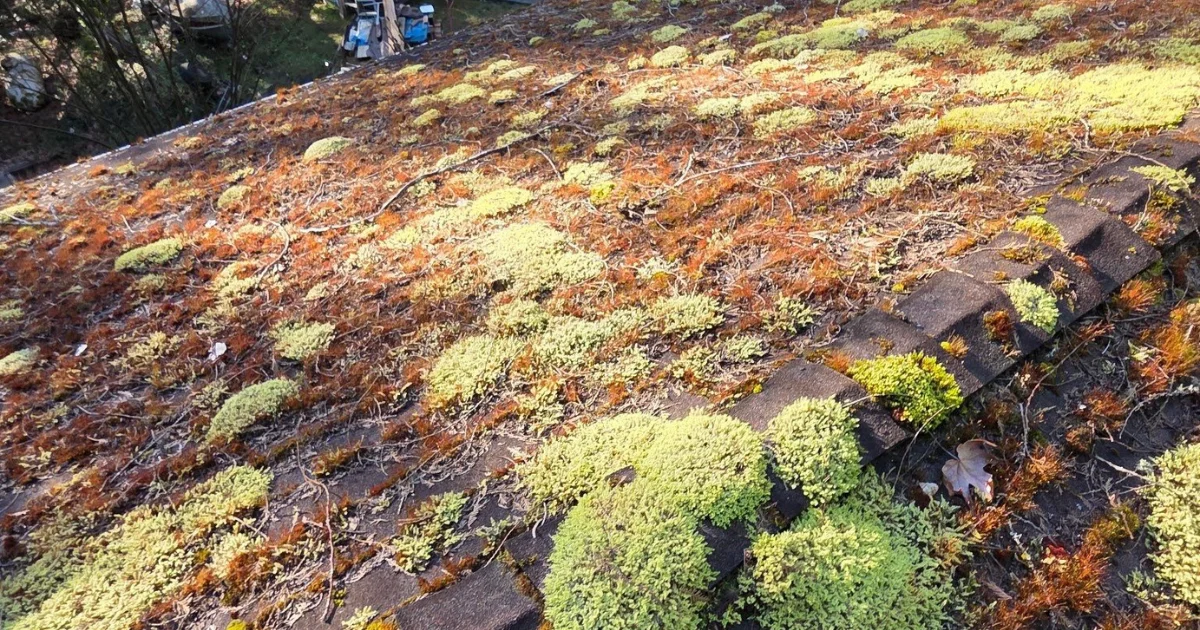
That combination creates an environment where moisture lingers instead of draining away. Over time, that leads to moss growth, algae and lichen development, gradual granule loss, and premature aging of roofing materials.
This is why homes surrounded by trees often show signs of wear earlier than expected, even when the roof was installed correctly.
Cedar Debris and Roof Damage: Small Material That Holds Moisture
Cedar trees drop fine needles, bark fragments, and natural oils that tend to settle into valleys and low areas of the roof.
This type of debris compacts easily and forms a dense layer that holds moisture directly against the shingles. As it breaks down, it creates organic material that feeds moss and keeps the surface consistently damp.
Because cedar debris is subtle and less visible from the ground, it often goes unnoticed. Many homeowners do not realize there is a problem until staining or moss appears, by which point the shingles underneath may already be wearing down.
Hemlock Debris and Roof Damage: The Sponge Effect
Hemlock needles are shorter and softer, which allows them to collect in large amounts across the roof surface.
Once they settle, they form a thick layer that behaves more like a sponge than loose debris. It absorbs and holds moisture, slows down drainage, and keeps sections of the roof damp for extended periods.
Instead of water moving off the roof efficiently, it lingers. Over time, that consistent moisture exposure can lead to shingle distortion, underlayment wear, and slow-developing leaks that are not immediately obvious inside the home.
Fir Debris and Roof Damage: Drainage and Backup Issues
Fir trees drop larger needles and cones, which tend to build up more quickly and visibly.
This debris often collects in valleys, along edges, and inside gutters. As it builds up, it restricts the natural flow of water off the roof.
When drainage is blocked, water begins to back up and can work its way beneath the shingles. This is where debris-related issues start to shift from surface wear to actual water intrusion.
Fir debris is commonly associated with clogged gutters, deteriorating valleys, and water being forced into areas it was never meant to reach.
How Tree Debris Turns Into Roof Damage Over Time
Roof damage from tree debris usually follows a gradual pattern rather than a single event.
Debris collects across the roof and begins to trap moisture. That moisture stays in place longer than it should due to limited drying conditions. As the roof remains damp, organic growth begins to develop and materials start to break down.
In the Pacific Northwest, biological growth like moss is more than a surface issue, and the National Roofing Contractors Association guidance on moss, algae, and roof drainage impact explains how these organisms can interfere with drainage and contribute to premature roof system deterioration.
Because this process happens slowly, it is easy to miss in the early stages. By the time visible signs appear inside the home, the roof has often been dealing with moisture for an extended period.
Signs Your Roof May Be Affected by Tree Debris
Homes in heavily treed areas tend to show similar early warning signs when debris is impacting the roof.
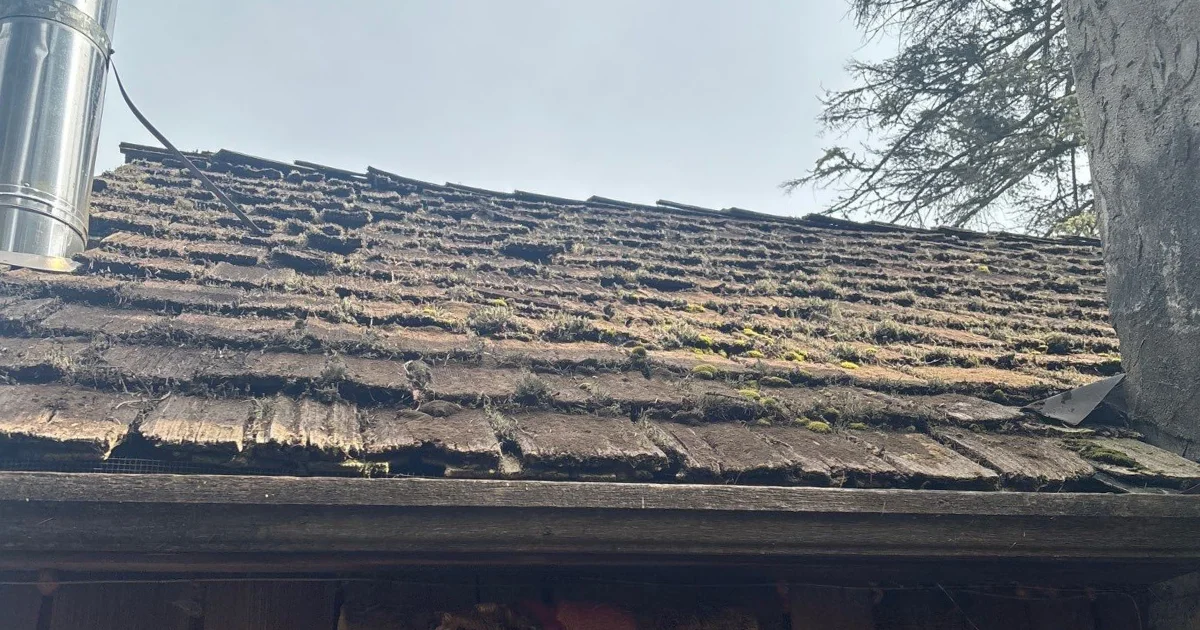
You may notice dark streaks or green patches forming across shingles, especially in shaded sections. Moss growth often appears near edges, valleys, and areas where debris collects. Some roofs develop uneven discoloration where moisture is being held in certain spots.
You might also see buildup behind chimneys or along roof transitions, or notice water stains inside that do not seem tied to a single obvious leak.
These signs usually indicate that the roof is not drying out the way it should.
How to Prevent Roof Damage From Tree Debris
Preventing roof damage from tree debris is less about removing trees and more about managing how they affect your roof.
Keeping the roof surface clear is one of the most effective steps. Removing debris before it breaks down helps prevent moisture from building up in the first place.
Gutters and valleys should also stay clear, since they control how water exits the roof. When those areas are blocked, problems tend to develop quickly.
Trimming back overhanging branches can reduce how much debris lands on the roof, especially during storms and seasonal drops.
Regular roof inspections are also important. Many of these issues start in places that are not visible from the ground, and catching them early can prevent more extensive damage later.
Why This Is One of the Most Overlooked Causes of Roof Damage
Tree debris does not feel urgent. There is no missing shingle or active leak at first, so it is easy to ignore.
But in the Pacific Northwest, this is one of the most consistent contributors to premature roof wear. The combination of moisture and organic buildup quietly shortens the lifespan of roofing materials.
What looks like a harmless layer of needles or debris is often the beginning of a much larger issue involving moisture intrusion, material breakdown, and avoidable repairs.
Why This Matters for Your Home
Cedar, hemlock, and fir trees are part of what makes this region unique, but they also create ongoing conditions that your roof has to handle year-round.
When debris is allowed to build up, it changes how your roof sheds water and how quickly it can dry out. Even a well-installed roof can struggle under those conditions.
If you are seeing buildup, moss, or uneven staining, it is a sign that your roof may be holding moisture longer than it should. Addressing it early is one of the simplest ways to protect the long-term health of your roof. Reach out to Integrity Roofing and Construction, or fill out our online form, and we can help you with your next step.