

By Kes Anderson
If you spend enough time looking at roofs in Kitsap County, you start to notice a pattern. What homeowners call “just some green stuff up there” is usually not all the same thing. Moss, algae, and lichen get lumped together, but they behave differently, grow differently, and cause different levels of damage.
The tricky part is most people do not notice it early. By the time it is visible from the driveway, it has usually been on the roof long enough to start changing how the surface holds moisture.
We see this constantly at Integrity Roofing & Construction. A homeowner calls about discoloration, and what started as a cosmetic issue has already turned into a moisture retention problem.
Why Kitsap County Roofs Are Especially Vulnerable
Kitsap County is basically a perfect environment for organic roof growth. Long wet seasons, consistent shade from trees, and limited sun exposure on many residential properties all play a role.
Roofs here do not get many chances to fully dry out. That alone creates conditions where moss, algae, and lichen can take hold and stay active for long periods.
We also see a lot of north-facing roof sections stay damp longer than the rest of the home. Those are usually the first areas where growth shows up.
It is not about neglect most of the time. It is just the climate doing what it does.
Moss on Roofs
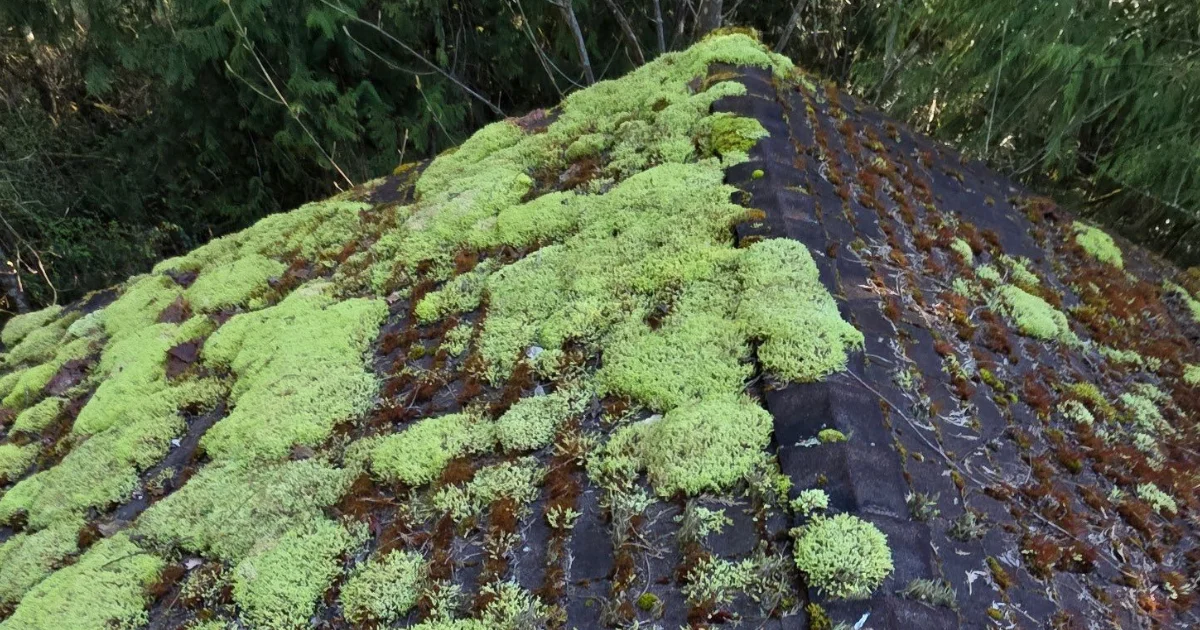
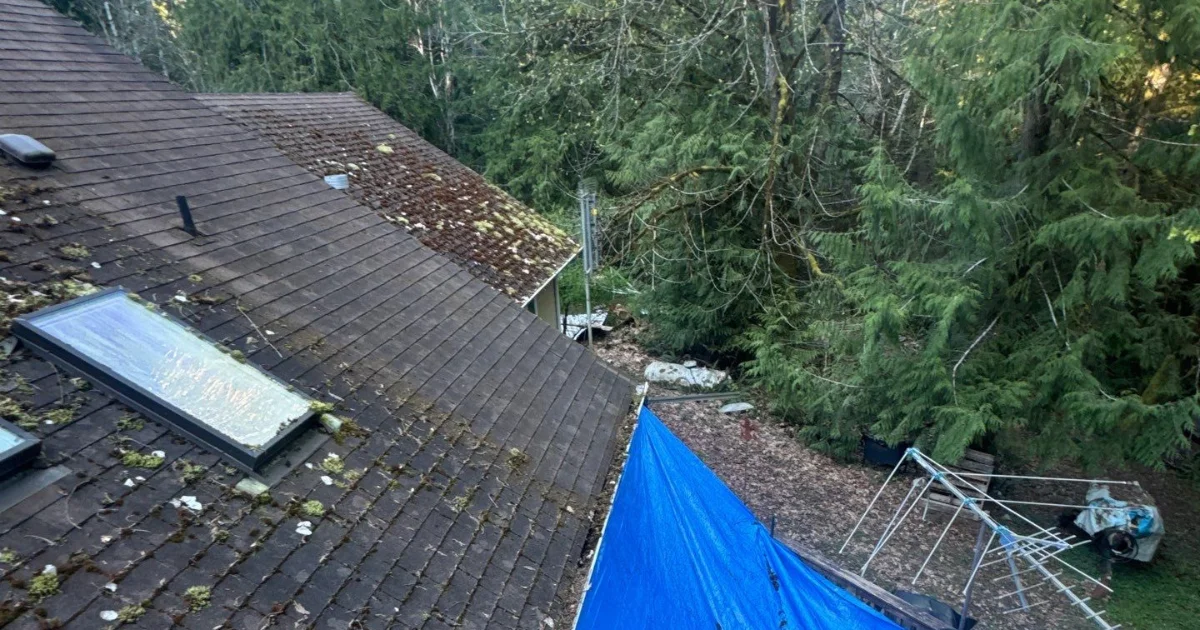
Moss is usually the most visible and easiest to recognize. It looks thick, green, and almost cushion-like. It tends to grow in clumps and spreads across shingles or other roofing surfaces where moisture stays trapped.
The issue with moss is not just appearance. It holds water like a sponge. Once it establishes itself, it keeps the roof surface damp for longer periods, which accelerates wear on shingles.
We see moss most often on shaded roof slopes, especially under overhanging trees. It starts small, usually along edges or in valleys, then slowly expands if it is not addressed.
In Kitsap County, moss is one of the fastest ways a roof starts aging unevenly.
Algae on Roofs
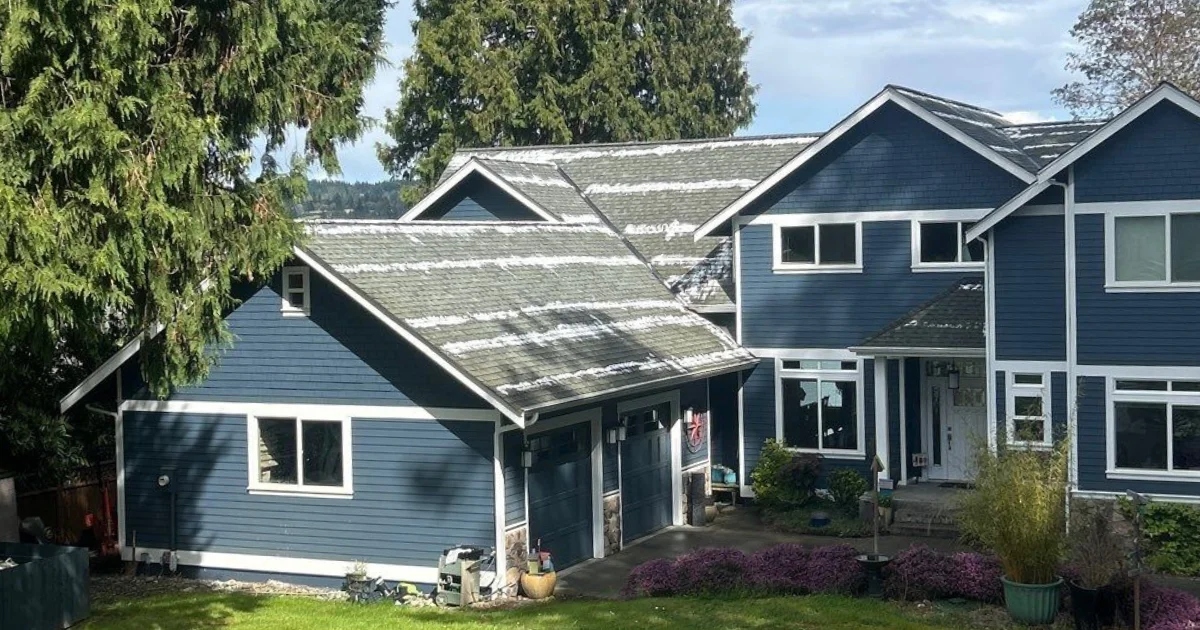
Algae is more subtle. It usually shows up as dark streaks or staining rather than thick growth. Many homeowners mistake it for dirt or simple discoloration at first.
Unlike moss, algae does not build structure or thickness on the roof surface. Instead, it spreads as a thin layer that changes the appearance of shingles over time.
Algae development on roofing surfaces is strongly influenced by moisture and shade, and it’s confirmed that consistently damp environments significantly increase biological growth on building materials.
The most common type we see is Gloeocapsa magma, which thrives in humid environments. It feeds off moisture and the limestone filler in asphalt shingles.
Algae is not immediately destructive the way moss can be, but it is often the first sign that the roof surface is staying damp longer than it should.
Lichen on Roofs
Lichen is the one most people misidentify. It is not just a single organism. It is actually a combination of algae and fungus working together.
Lichen behaves differently from moss or algae, and the University of Maryland Extension explanation of lichen structure and growth behavior explains how it forms a tight biological bond to surfaces, which is why it is so difficult to remove from roofing materials once established.
On a roof, lichen usually looks flat, crusty, and tightly attached to the surface. It can be gray, green, or even white in appearance, and it does not brush off easily.
This is where things get more serious. Lichen anchors itself into the surface of shingles, which means removal is not simple. It can actually cause surface damage if it is scraped off incorrectly.
We usually see lichen on older roofs or areas that have been consistently shaded and untreated for long periods.
How to Tell the Difference at a Glance
Most homeowners do not need a science lesson. They just need a quick way to tell what they are looking at.
Moss looks thick and soft. It holds shape and feels raised.
Algae looks like staining or streaking. It is flat and spreads like discoloration.
Lichen looks crusty and stuck down. It almost blends into the roof surface and does not move or brush away easily.
Once you know what you are looking at, you can usually tell right away which one is developing on your roof.
Why It Matters More Than It Looks Like
A lot of people treat roof growth as a cosmetic issue first. In Kitsap County, it is more of a moisture management issue.
Moss holds water against the surface. Lichen bonds to it. Algae signals that moisture is lingering longer than it should.
None of these show up randomly. They show up when conditions allow them to stay.
The longer they sit, the more they change how the roofing system performs. It’s not an immediate failure. It is gradual wear that speeds up over time.
What We See Work in the Field
The roofs that stay cleaner longer are not necessarily newer. They are usually better managed.
Tree trimming makes a bigger difference than most people expect. So does roof slope exposure and airflow around the structure.
We also see a lot of benefit in early treatment instead of waiting until growth is widespread. Once moss or lichen gets established, removal becomes more involved and more likely to affect the surface.
This is where timing matters more than reaction.
Where This Leaves Your Roof
If you are seeing green patches, dark streaks, or crusty buildup on a roof in Kitsap County, it is worth figuring out what you are actually dealing with before it spreads further.
Each type of growth behaves differently, and the approach to handling it depends on what is there and how long it has been developing.
At Integrity Roofing & Construction, we typically start by identifying the condition first, then recommending a practical next step based on roof age, exposure, and material type. Give us a call or fill out our online form and we will help identify your roof’s needs.