

By Nathan Maille
Why should you replace felt paper with Tyvek?
Because the biggest threats to your home are often the ones you cannot see.
Most homeowners focus on shingles or siding, but the underlayment underneath is what actually protects your home from moisture and air intrusion.
At Integrity Roofing & Construction, we see this all the time across the Puget Sound. A roof may look fine from the outside, but underneath, the felt paper has already started to fail.
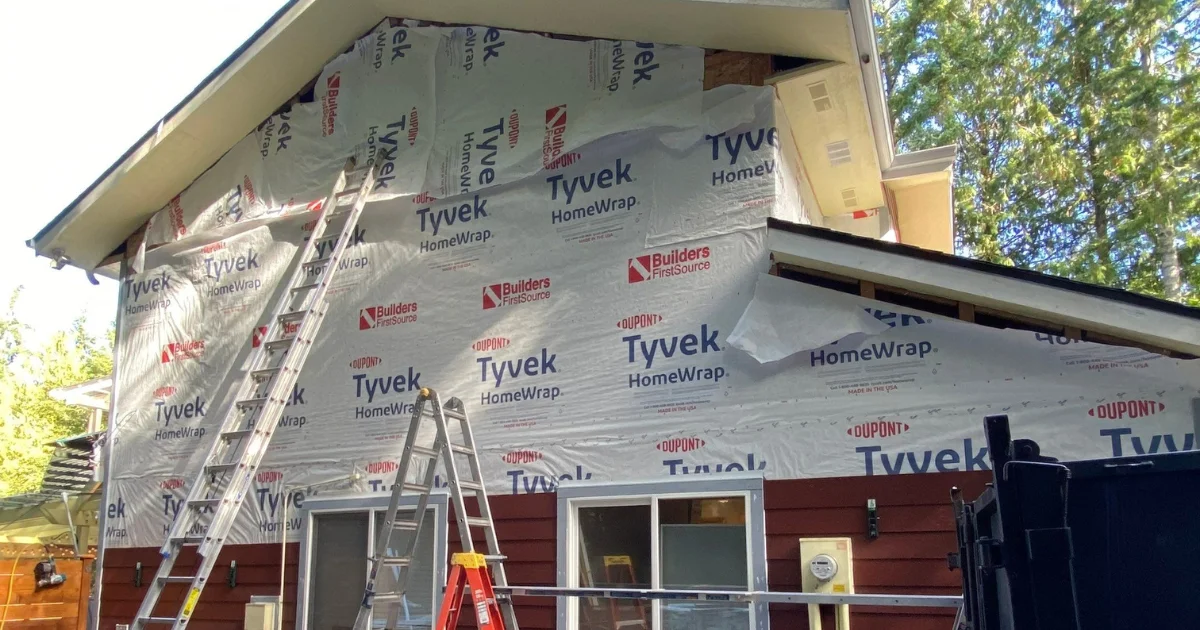
Upgrading to Tyvek is not just a material choice. It is a system upgrade that protects your home long-term.
Why Replace Felt Paper with Tyvek Instead of Keeping Old Underlayment?
Felt paper, also known as tar paper, has been used for decades. But it was never designed to perform the way modern materials do.
Over time, felt:
- Absorbs moisture instead of resisting it
- Breaks down in consistently wet environments
- Loses its protective ability once saturated
Tyvek is built differently.
It acts as a weather-resistant barrier that blocks bulk water while allowing moisture vapor to escape. That balance is critical in preventing trapped moisture inside your home.
If you are already investing in a roofing or siding project, this is the moment to eliminate weak points in your system.
How Replacing Felt Paper with Tyvek Improves Moisture Protection
Moisture is one of the leading causes of long-term structural damage.
In the Puget Sound, homes are constantly exposed to:
- Rain
- Damp air
- Limited drying conditions
Tyvek helps manage this by stopping water intrusion while still allowing vapor to escape.
Building science research shows that controlling moisture and air movement is essential to preventing mold, rot, and insulation failure, which is why modern building practices have shifted toward advanced weather barriers.
A properly designed building envelope must control heat, air, liquid water, and water vapor, which is why modern underlayments are built to manage multiple types of moisture movement at once.
When moisture gets trapped behind felt paper, we often find:
- Mold growth
- Wood rot
- Compromised insulation
Replacing felt paper with Tyvek significantly reduces that risk.
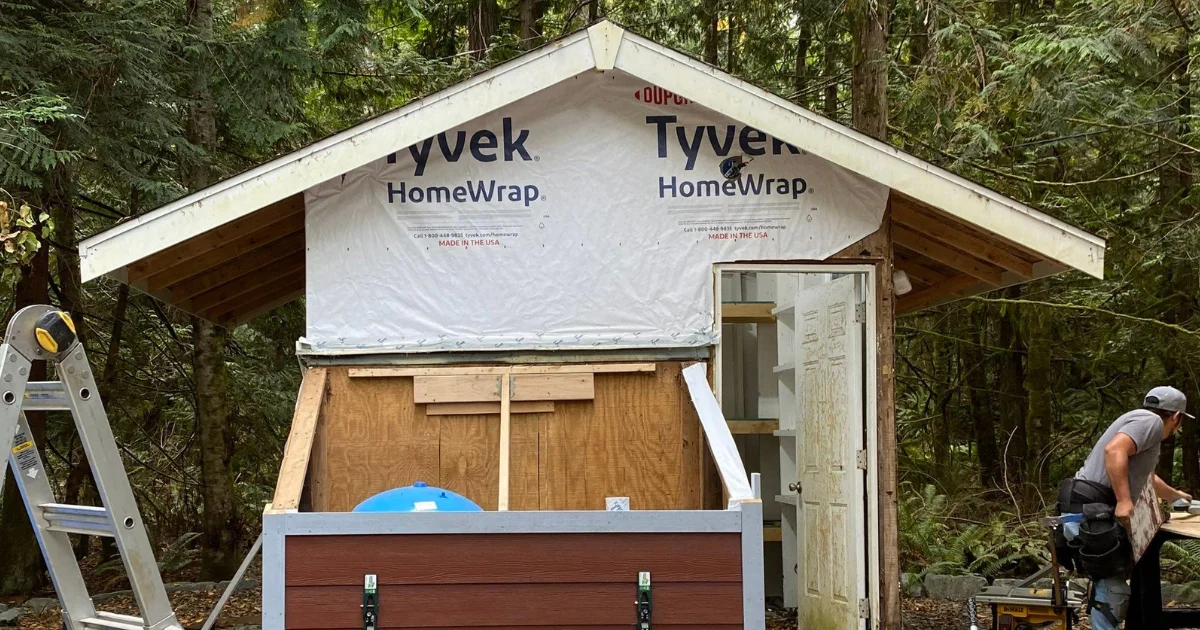
The Air Barrier Advantage Most Homeowners Overlook
This is where Tyvek really separates itself.
Felt paper does very little to control airflow. Tyvek helps create a tighter building envelope by reducing uncontrolled air leaks.
That directly impacts:
- Energy efficiency
- Indoor comfort
- HVAC performance
If your home feels drafty or uneven in temperature, your underlayment may be part of the problem.
We see this frequently during inspections. Homeowners think it is a window or insulation issue, when in reality, air is moving freely through the wall system.
Why Replacing Felt Paper with Tyvek Matters in the Puget Sound Climate
Homes in Tacoma, Olympia, and surrounding Puget Sound areas face one consistent challenge: moisture that does not dry quickly.
We routinely tear off roofing or siding and find felt paper that is:
- Saturated
- Brittle
- No longer functioning as a protective layer
Tyvek performs better in these conditions because it:
- Repels water instead of absorbing it
- Maintains durability over time
- Dries out quickly when exposed to moisture
This is not just a small upgrade. It is a long-term protection strategy tailored to this climate.
Felt Paper vs Tyvek: A Real-World Comparison
Felt Paper:
- Absorbs and holds moisture
- Breaks down faster in wet climates
- Provides minimal air control
Tyvek:
- Resists water penetration
- Allows vapor to escape
- Improves air sealing
- Holds up longer in harsh conditions
From what we see in the field, homes with upgraded weather barriers consistently perform better over time.
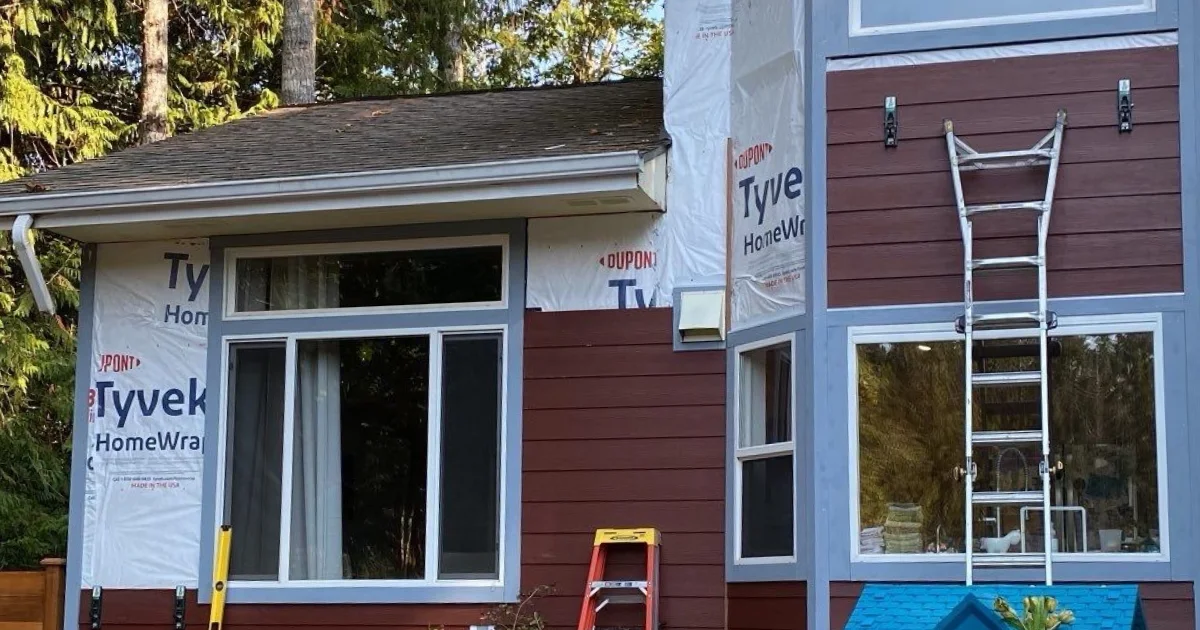
Why We Recommend This Upgrade During Your Project
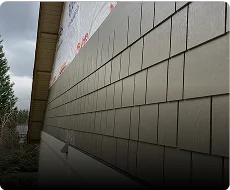
The best time to replace felt paper with Tyvek is when your home is already opened up during a roofing or siding project.
At that point:
- The structure is exposed
- Installation is efficient
- You avoid future tear-offs
We always approach projects by looking at the entire system, not just the visible materials.
If there is an opportunity to improve durability and performance, we will recommend it.
This is one of the upgrades that makes a measurable difference.
What This Means for Your Home
Upgrading from felt paper to a modern weather barrier like Tyvek isn’t just a technical improvement—it directly impacts how your home performs over time. With better moisture control, your walls are able to dry properly instead of trapping water where it can lead to mold, rot, or structural damage.
It also improves energy efficiency by reducing uncontrolled air movement. That means your home stays more comfortable year-round, and your HVAC system doesn’t have to work as hard to maintain temperature.
Over the long term, this upgrade helps protect everything behind your siding—from framing to insulation—extending the lifespan of your exterior and reducing the likelihood of costly repairs. It’s one of those hidden improvements that homeowners may never see, but absolutely benefit from every day.
What the Research Says About Modern Weather Barriers
Modern building standards emphasize the importance of integrated moisture and air control layers.
Modern weather barriers are designed to allow moisture vapor to escape while blocking bulk water, helping wall systems dry and preventing trapped moisture.
This is why products like Tyvek have become a standard in higher-performing building envelope systems.
Protect Your Home by Upgrading What You Can’t See
Replacing felt paper with Tyvek is not about overbuilding. It is about building smarter.
A better underlayment helps:
- Prevent hidden moisture damage
- Improve energy efficiency
- Extend the life of your home’s structure
At Integrity Roofing & Construction, we see the difference this makes every day in the Puget Sound.
If you are planning a roofing or siding project, this is one upgrade worth making.
Call 360-900-7663 or fill out our online form to schedule an inspection and find out if replacing your underlayment is the right move for your home.