

By Nathan Maille
A lot of decks in Washington look great for the first year, then start breaking down faster than people expected. Boards stay wet for days. Surfaces get slick. Framing starts holding moisture longer than it should. That’s usually when homeowners realize the original design was not built for this climate.
In the Pacific Northwest, it is not just about how a deck looks when it is finished. It is about how it handles constant moisture, limited sun, and long stretches where nothing really dries out. That is where certain deck styles hold up better than others.
At Integrity Roofing & Construction, we see the same patterns over and over. The decks that last are not always the most expensive or the most detailed. They are the ones designed with airflow, drainage, and real-world use in mind.
Why Deck Design Matters in the PNW
Moisture is the constant factor here. Even outside of heavy rain, decks stay damp longer than most homeowners expect. That affects everything from the surface boards down to the framing.
We run into decks where water gets trapped in tight corners, under planters, or between boards that were spaced too closely. It does not take much. Once that moisture sits, it starts working on the structure.
Shade makes it worse. A deck that does not get consistent sunlight can stay wet for days after a storm. That is when algae builds up, surfaces get slippery, and maintenance becomes a regular chore instead of occasional upkeep.
This is where design starts to matter more than people think. A good-looking deck that traps moisture will not stay good-looking for long in this region.
Ground-Level Decks
Ground-level decks are common, especially when homeowners want a clean transition from the house into the yard.
They can look great when they are first built. The issue is what happens underneath.
We see a lot of ground-level decks that were installed too close to the soil with little to no airflow. Over time, that space holds moisture. Framing stays damp. Boards start to wear unevenly. In some cases, sections of the structure begin breaking down much earlier than expected.
That does not mean this style should be avoided. It just needs to be done right.
Proper spacing from the ground, a solid drainage base, and enough room for air to move underneath the structure make a big difference. Without those, this is one of the styles that tends to cause the most frustration for homeowners in Washington.
Elevated and Multi-Level Decks
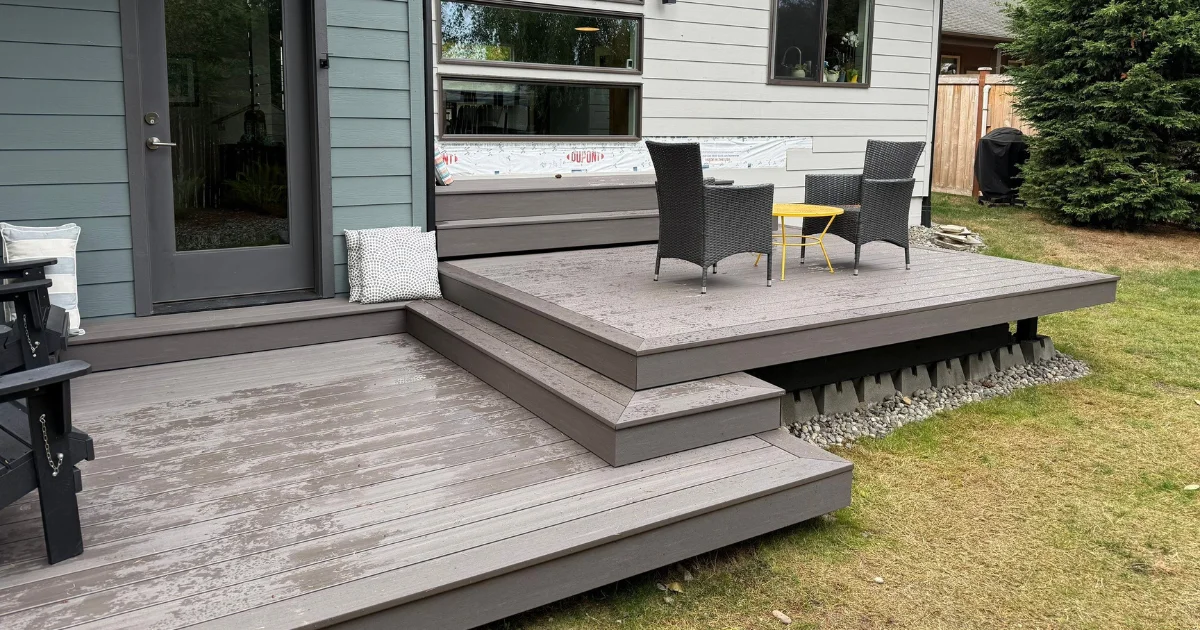
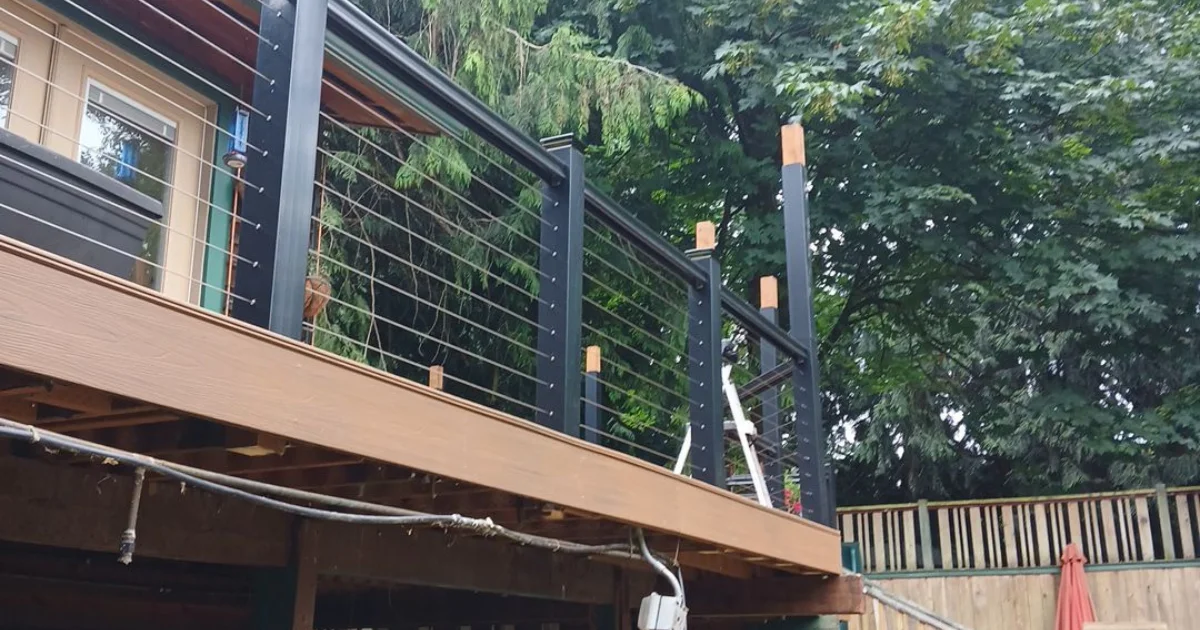
If there is one style that consistently performs better in the PNW, it is elevated decking.
Getting the structure off the ground allows airflow to move through the system. That alone helps materials dry out faster and reduces long-term moisture exposure.
We see this especially on homes with slopes or daylight basements. Elevated decks fit naturally into those layouts and tend to hold up better over time.
Multi-level deck designs also make sense for a lot of homeowners. They break the space into usable areas without feeling crowded. One section for seating, another for dining, maybe a lower level that connects to the yard.
From a performance standpoint, these designs usually age better. More visibility, better airflow, and easier access for maintenance all work in their favor.
They do require more planning. More structure means more connection points, and every connection point needs to be handled correctly to keep water out.
Covered and Partially Covered Decks
In this region, covered decks are not just a luxury. They are practical.
We hear it all the time. Homeowners build a deck, then realize they only use it a few months out of the year because of rain. Adding coverage changes that.
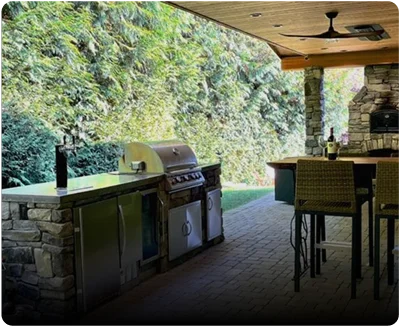
A full cover protects the surface from direct rainfall and slows down wear. A partial cover can still make a big difference, especially over seating or cooking areas.
There is a catch though.
If water is not directed properly, it ends up concentrating in certain spots. We have seen covered sections that actually wear faster because runoff was not planned correctly.
Ventilation also matters here. Blocking rain does not eliminate moisture. Air still needs to move through the space, or you end up trapping humidity underneath the cover.
Done right, this style makes a deck far more usable in Washington. Done wrong, it just shifts the problem somewhere else.
Composite vs Wood Deck Styles
Material choice is tied closely to style, especially in a wet climate.
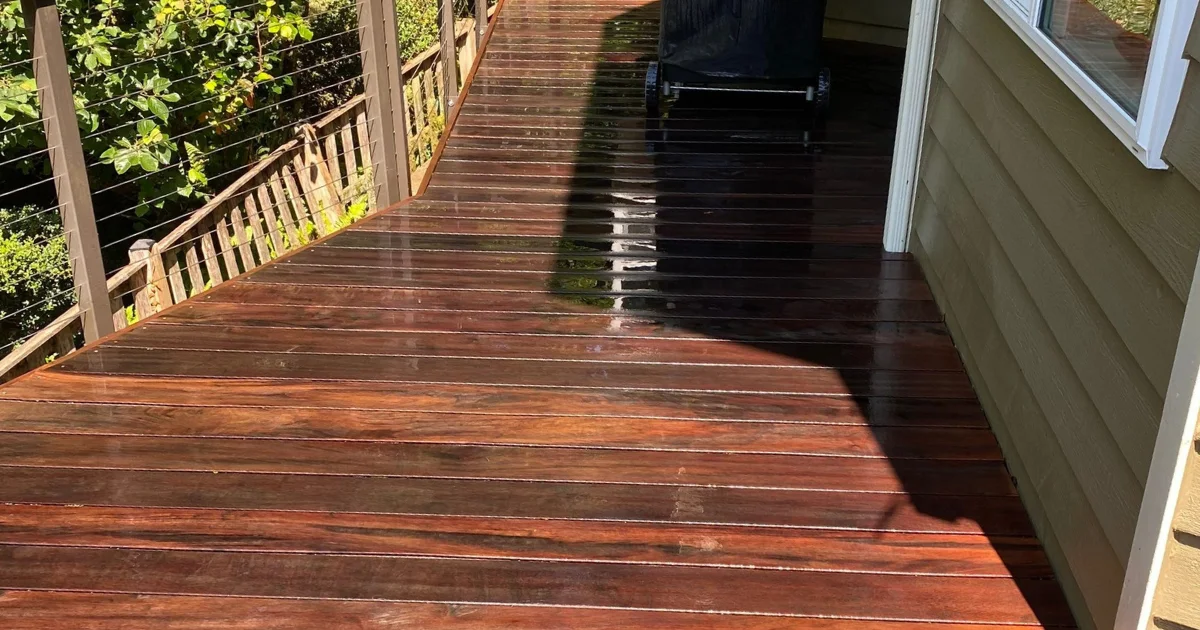
Wood decks, particularly cedar, are still popular because of how they look. They fit the PNW aesthetic well. The tradeoff is maintenance. Regular cleaning, sealing, and monitoring for wear are part of the deal.
The constant rain and shade in the PNW can accelerate mold growth in damp outdoor environments, which directly impacts the lifespan of certain deck materials.
This is where we see homeowners get frustrated. They did not expect how often upkeep would be needed to keep the deck looking the way it did at installation.
In the Pacific Northwest, understanding wood durability in moisture-prone environments is essential when choosing a deck style that will last.
Composite decking solves a lot of those issues. It handles moisture better, resists rot, and does not require the same level of ongoing maintenance.
It is not completely maintenance-free, but it is much more forgiving in this environment.
Both materials can work. It comes down to how much time and effort someone wants to put into maintaining the space over the years.
What We Recommend Based on What We See
Some patterns show up consistently in Washington, and they are hard to ignore.
Elevated decks tend to last longer. Ground-level decks need more attention to detail or they become a problem. Covered sections make decks more usable, but only if drainage is handled properly.
We usually steer homeowners toward designs that allow airflow and do not trap moisture. That solves more problems than any specific material choice.
This is also where expectations matter. A deck in this climate is not a set-it-and-forget-it feature. It needs to be built with the environment in mind from the start.
At Integrity Roofing & Construction, we look at the whole setup before recommending a direction. Sun exposure, slope, drainage, and how the space will actually be used all factor into what deck style makes sense.
If you are planning a new deck or reworking an existing one, it’s worth talking through those details early. You can reach Integrity Roofing & Construction at 360-900-7663 or fill out our online form. We can walk through your space and help you get a realistic idea of what will hold up best in Washington conditions.