

By Kes Anderson
Commercial roofs in Washington do not usually fail in a dramatic way. It is rarely a sudden event. What we see far more often is slow buildup. Small things that do not look urgent until they suddenly are. Roofing maintenance is one of the most important responsibilities for commercial building owners in Washington.
Moisture is the main driver. Even when it is not actively raining, roofs in this state stay damp longer than most people realize. That constant exposure changes how materials age. It’s not harsh sunlight or extreme heat doing the damage here. It’s steady wet conditions that never really let the system fully dry out.
We run into this all the time at Integrity Roofing & Construction. A building owner will say the roof “has been fine for years,” and technically they are right. It looks fine. The issue is what is happening underneath that surface level.
That is why inspection timing matters more here than in drier regions. You are not just reacting to storms. You are managing constant environmental wear.
What Washington Weather Is Really Doing to Commercial Roofs
People usually think of weather damage as something obvious. Missing shingles, storm blow-offs, visible leaks. In Washington, it is more subtle than that.
The long wet seasons keep roofing systems under constant moisture exposure. That alone leads to moss growth, surface degradation, and slow breakdown at seams and flashing points. It does not happen overnight, which is why it gets missed.
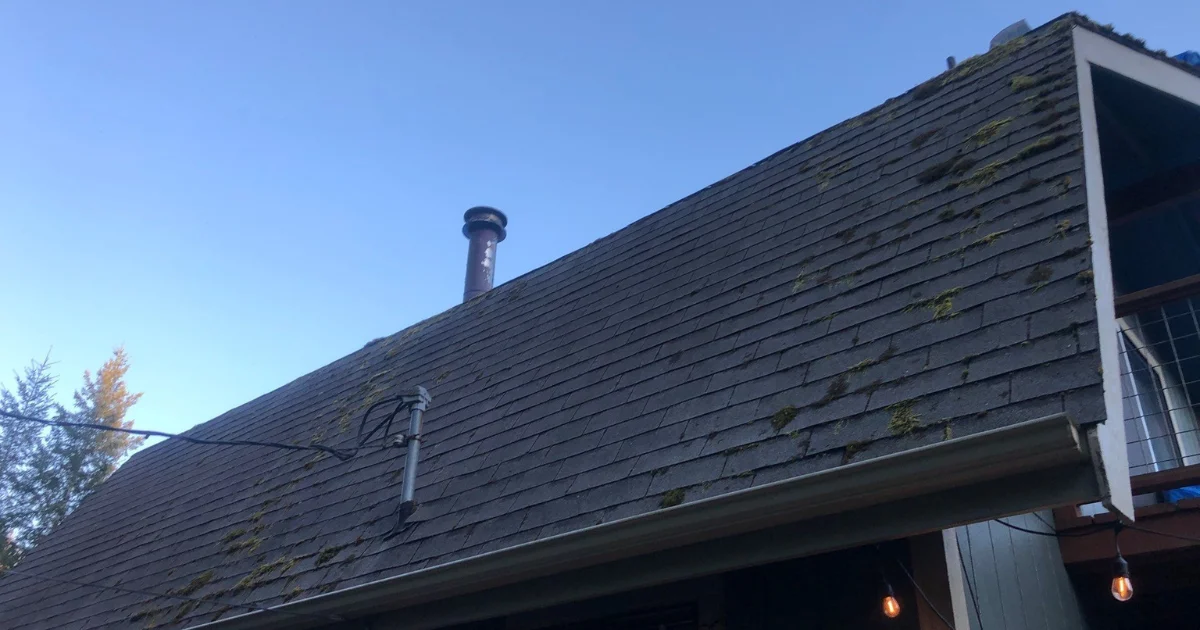
Freeze and thaw cycles add another layer of stress, especially outside of coastal areas. Water gets into small gaps, expands, and slowly works those gaps wider over time. It is not dramatic in the moment, but it compounds.
Wind events are less frequent, but they matter. Not because they always cause immediate damage, but because they gradually loosen edges, flashings, and penetrations. Once those details start shifting even slightly, water finds a way in.
This is the part that gets overlooked. Roof systems in Washington are almost always dealing with multiple small stress factors at the same time instead of one major cause of failure.
How Often Commercial Roofs Should Be Inspected
For most commercial buildings in Washington, twice a year is the baseline that actually holds up in real conditions.
Spring inspections matter because they reveal what winter has been doing. That is when we typically find saturated insulation, slow drainage issues, and minor leaks that only show up after months of rain exposure.
Fall inspections matter just as much, but for a different reason. That is the prep cycle. Clearing debris, checking drainage paths, and catching weak points before the long wet stretch begins.
That said, not every building fits neatly into a twice-a-year schedule.
Industry consensus consistently points to at least two professional inspections per year, and that aligns closely with the National Roofing Contractors Association (NRCA) guidance on roof inspection frequency, especially for commercial systems in climates with heavy seasonal moisture like Washington.
If a roof has a lot of foot traffic, mechanical equipment, or repeated service access, quarterly inspections make more sense. We see this on retail centers, warehouses, and buildings where multiple contractors are up there throughout the year. Every trip onto the roof increases the chance of something being disturbed.
Older roofs also need more attention. Once a system gets past its midpoint in service life, things do not fail evenly anymore. Small issues start accelerating faster.
On the flip side, newer roofs still need inspections, but the focus is more on catching installation-related issues early rather than wear and tear.
Skipping inspections entirely or stretching them to once a year is where problems usually start compounding.
What We Are Actually Looking For During Inspections
A proper commercial roof inspection is not just walking the surface and checking a box. It is focused on where systems actually fail.
Drainage is always one of the first things we look at. Standing water or slow drainage is one of the earliest warning signs that something is off. In Washington, debris builds up faster than most building owners expect because of trees, wind, and constant moisture cycles.
Seams and flashing details come next. These are the most common failure points across almost every roofing system we work on. Once a seam starts to lift or a flashing starts to separate even slightly, water does not need much encouragement to get in.
Penetrations are another critical area. HVAC curbs, vent stacks, skylights, and edge transitions all move slightly over time. That movement adds up. Most leaks trace back to these points rather than the open field of the roof.
We also look at surface condition. Small punctures, blistering, or membrane wear might not seem urgent at first, but they usually indicate where the system is starting to break down.
One thing we explain to building owners often is this: Roof problems are rarely random. They show up in the same places over and over. The inspection is about catching those patterns early enough to stay ahead of repairs instead of reacting to them.
What Happens When Inspections Are Delayed
When inspections are skipped, the damage pattern is usually slow at first, then suddenly expensive.
A small seam issue develops and goes unnoticed. Water gets underneath the membrane during a long rain cycle. It spreads laterally before anyone sees interior signs. By the time it shows up inside the building, the affected area is usually much larger than expected.
Drainage issues are another common progression. Water starts pooling longer than it should. That standing water slowly breaks down materials and saturates insulation below the surface. The roof might still look fine from above while performance is already declining.
Moss growth is often dismissed, but it plays a bigger role than people think. It holds moisture directly against the roof surface. That constant damp contact speeds up deterioration, especially in shaded areas.
What makes this frustrating is that none of these problems are unpredictable. They are just easy to miss without consistent inspections.
This is where timing becomes the difference between maintenance and repair.
Where This Leaves Your Roof
Commercial roofing in Washington is less about reacting to damage and more about staying ahead of slow, predictable wear.
A twice-a-year inspection schedule works for most buildings, but the real answer depends on how the roof is being used and how old it is. Some need more attention, some need less, but very few can be safely ignored for long stretches in this climate.
At Integrity Roofing & Construction, we see the difference clearly between buildings that stay on a schedule and buildings that do not. One group deals with planned maintenance. The other deals with surprise repairs.
If you are not sure where your building falls in that range, it usually makes sense to have it looked at before small issues turn into larger ones. You can reach Integrity Roofing & Construction at 360-900-7663 or fill out our online form. We can talk through what your roof actually needs and what a realistic inspection schedule looks like for it.